
Pyramids of Giza: The Complete Guide to Egypt’s Greatest Ancient Wonder
The Pyramids of Giza are the last surviving Wonder of the Ancient World and the single most iconic archaeological site on Earth. Built approximately 4,500 years ago on the Giza Plateau just 15 kilometers (9 miles) southwest of central Cairo, these three monumental tombs — constructed for the pharaohs Khufu, Khafre, and Menkaure — remain an enduring testament to the engineering brilliance of ancient Egypt’s Old Kingdom.
Every year, over 14 million tourists visit the Giza Necropolis, making it Egypt’s most visited site and one of the most photographed locations in the world. But beyond the Instagram shots, the pyramids hold centuries of history, architectural mysteries, and practical details that can make or break your visit. Whether you’re planning your first trip or brushing up before departure, this guide covers everything you need to know — from the pharaohs who built them to the best time to arrive at the gate.
Understanding the pyramids before you see them transforms the experience from simple sightseeing into something genuinely profound. Let’s break down the history, key facts, and essential travel tips for visiting the Giza Pyramid Complex in 2025 and 2026.
Who Built the Pyramids of Giza and Why?
The three pyramids at Giza were built during Egypt’s Fourth Dynasty (approximately 2575–2465 BCE) as royal tombs designed to protect the pharaohs’ bodies and possessions for eternity. The ancient Egyptians believed that preserving the body was essential for the pharaoh’s spirit to thrive in the afterlife, and these massive stone structures served as both burial chambers and statements of divine royal power.
The Great Pyramid of Khufu (Cheops)
The Great Pyramid of Cheops is the largest of the three and the oldest. Pharaoh Khufu commissioned it around 2560 BCE. At 146.6 meters (481 feet) tall upon completion, it held the record as the tallest man-made structure on Earth for over 3,800 years — until Lincoln Cathedral in England surpassed it around 1311 CE. Today, due to erosion and the removal of its original limestone casing, it stands at approximately 138.5 meters (454 feet).
The Great Pyramid contains an estimated 2.3 million limestone blocks, each weighing an average of 2.5 tons. Some granite blocks in the King’s Chamber weigh up to 80 tons. The precision of its construction is extraordinary: the base is level to within just 2.1 centimeters across its entire 230-meter perimeter, an accuracy that challenges modern engineering standards.
The Pyramid of Khafre (Chephren)
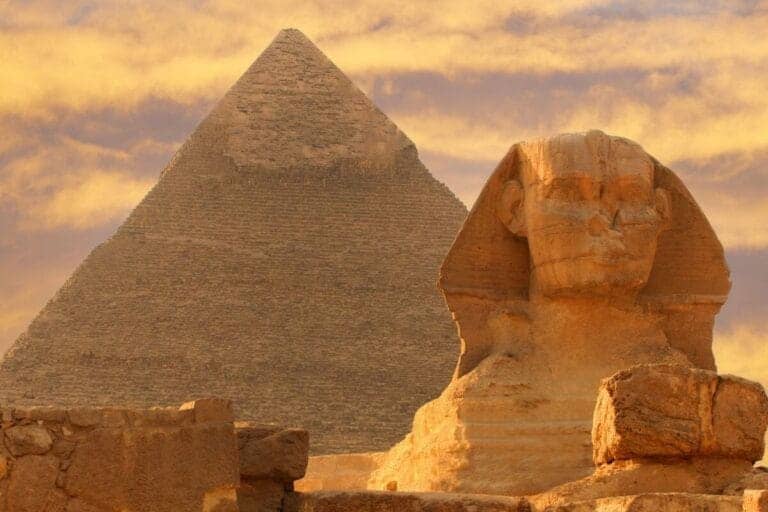
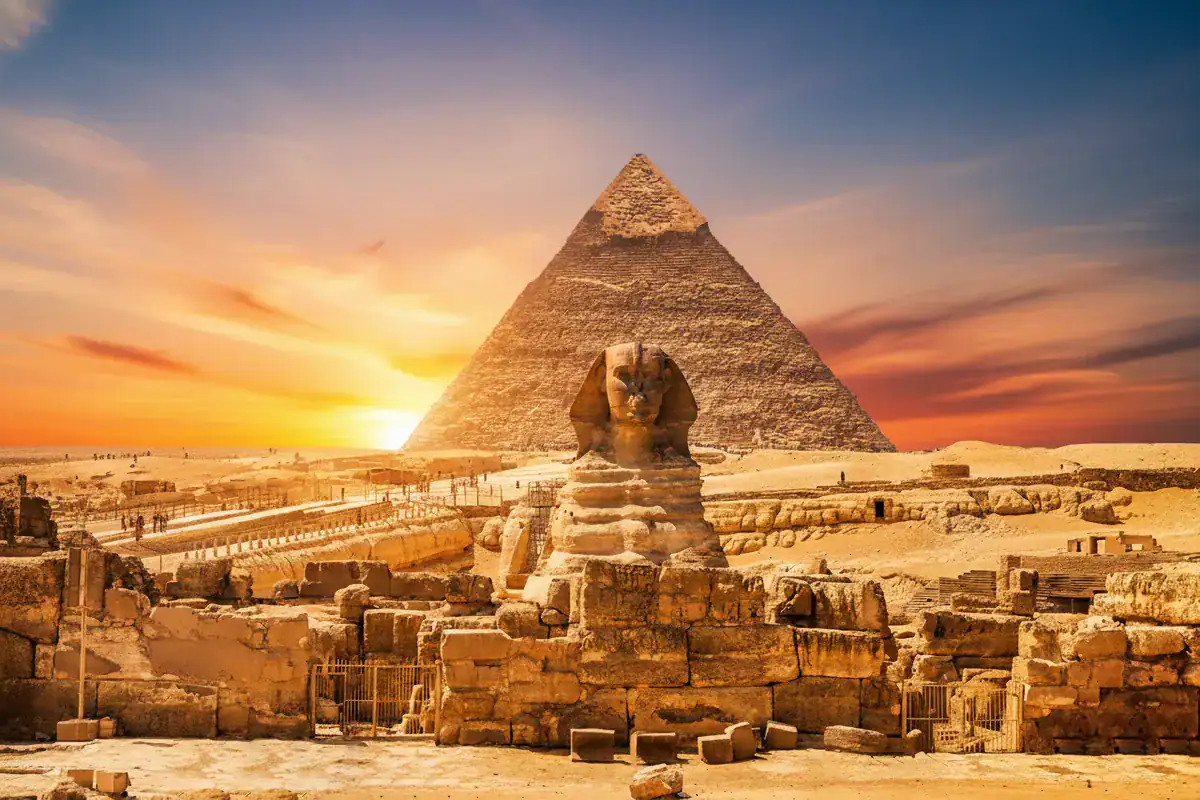
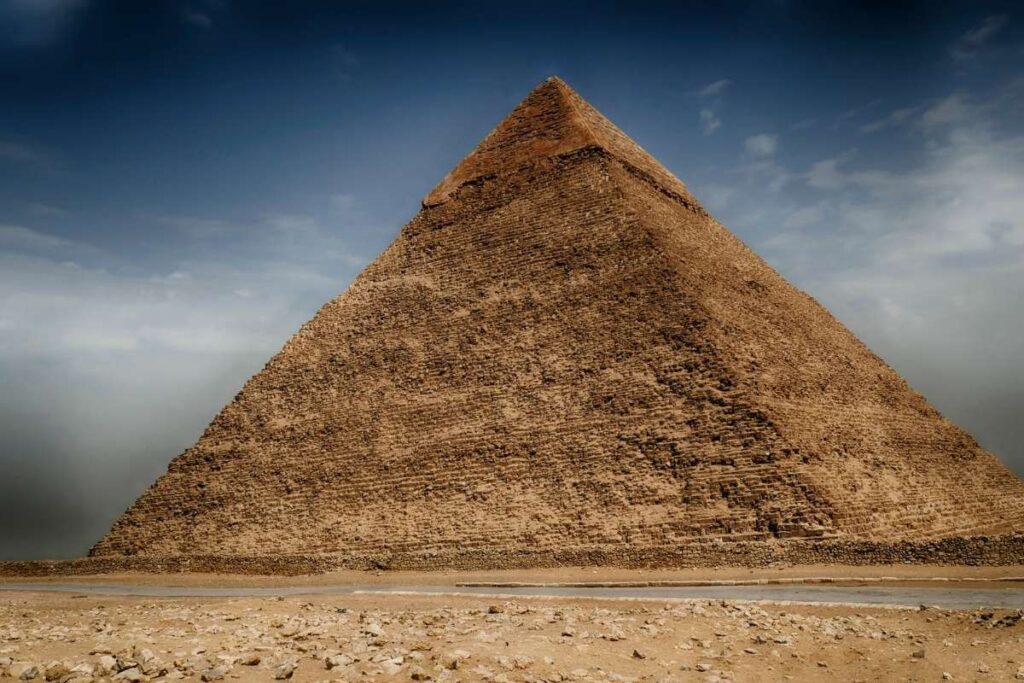
The Pyramid of Khafre, built by Khufu’s son around 2520 BCE, appears taller than the Great Pyramid in many photographs because it sits on higher bedrock. It actually stands at 136.4 meters (448 feet). Notably, you can still see remnants of the original smooth Tura limestone casing near its peak — the only pyramid at Giza that retains any of its original outer surface.
The Pyramid of Menkaure
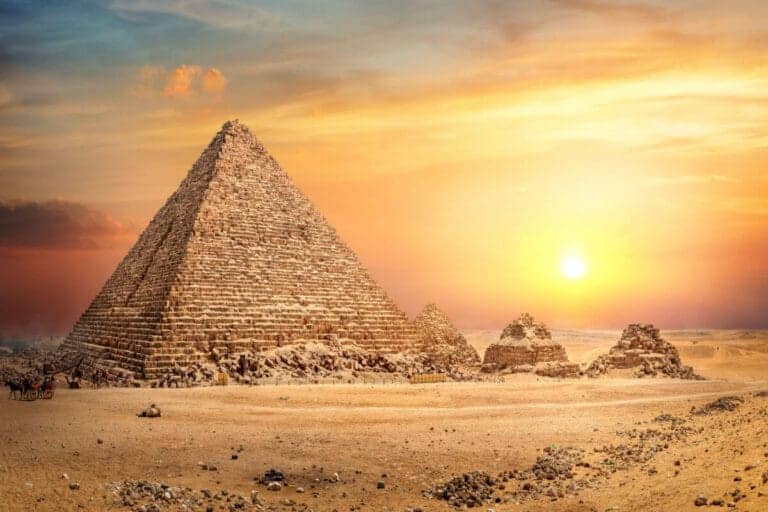
The Pyramid of Menkaure is the smallest of the three main pyramids at 65 meters (213 feet). Built by Khafre’s successor around 2490 BCE, its lower courses were originally clad in Aswan granite rather than limestone, giving it a distinctive two-toned appearance. Three smaller subsidiary pyramids, likely built for Menkaure’s queens, stand adjacent to its south face.
What Else Is Inside the Giza Pyramid Complex?
The Giza Necropolis extends far beyond the three main pyramids. The entire complex covers approximately 17,000 acres and includes several significant structures and sites that most visitors should plan to see.
The Great Sphinx
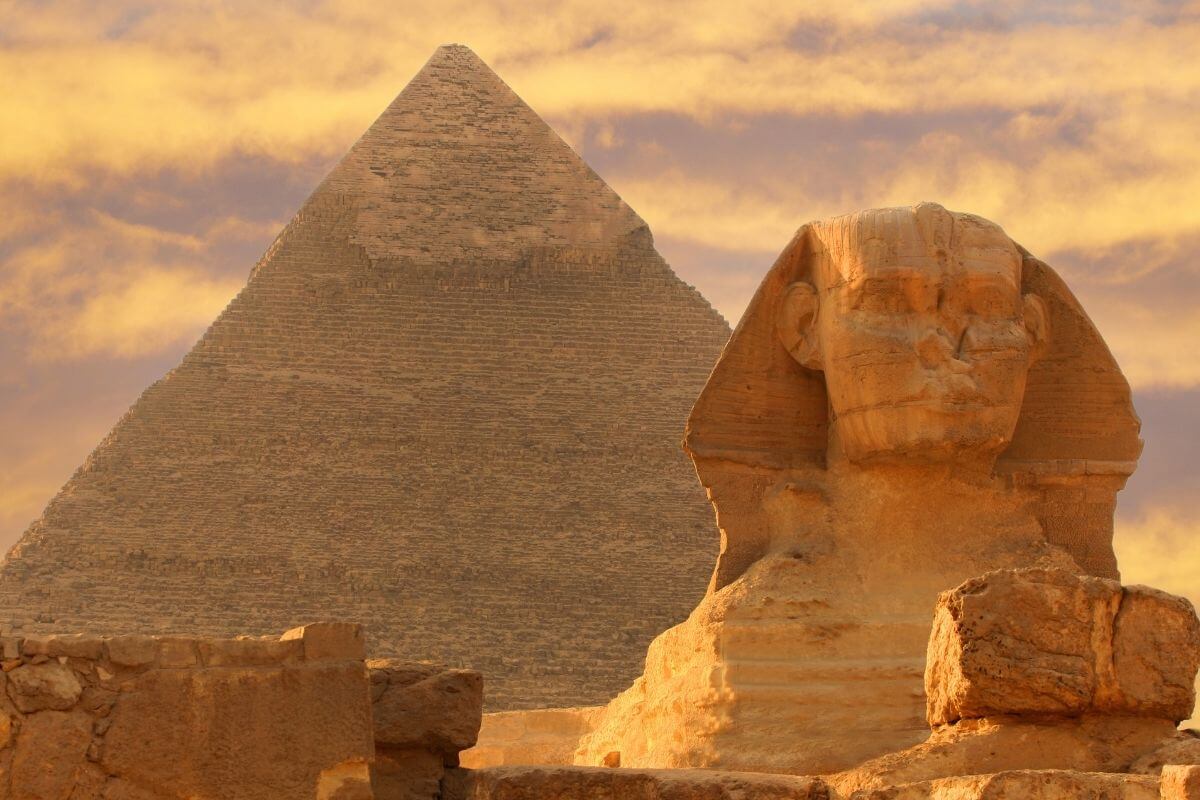
The Great Sphinx is a limestone statue with the body of a lion and the head of a human, believed to represent Pharaoh Khafre. Measuring 73 meters (240 feet) long and 20 meters (66 feet) high, it is the largest monolith statue in the ancient world. Carved directly from the bedrock of the Giza Plateau, the Sphinx faces due east and has guarded the necropolis for over 4,500 years.
The Solar Boat Museum
Discovered in 1954 in a sealed pit at the base of the Great Pyramid, the Khufu Solar Boat is a 43.6-meter (143-foot) cedar wood vessel believed to have been used in the pharaoh’s funeral procession. The reconstructed boat was displayed at the Giza Solar Boat Museum until 2021, when it was relocated to the new Grand Egyptian Museum (GEM), scheduled for full opening near the Giza Plateau.
Workers’ Village and Cemeteries
Archaeological excavations led by Dr. Mark Lehner and Dr. Zahi Hawass uncovered an ancient workers’ village southeast of the Sphinx, revealing that the pyramids were built by skilled Egyptian laborers — not slaves, as popularly myth suggested. The site includes bakeries, breweries, and dormitories that housed an estimated 20,000 to 30,000 workers during peak construction periods.
How Were the Pyramids of Giza Built?
The construction methods of the pyramids remain one of archaeology’s most debated topics, though modern research has provided substantial clarity. The core limestone blocks were quarried from nearby deposits on the Giza Plateau itself, while the finer Tura limestone used for the outer casing came from quarries across the Nile, approximately 15 kilometers away. Granite blocks for internal chambers were transported from Aswan, over 800 kilometers (500 miles) to the south.
Recent discoveries, including a 2017 papyrus find at the Red Sea port of Wadi al-Jarf (the oldest known papyri in existence), document workers transporting limestone blocks by boat along specially constructed canals that connected the Nile to the Giza Plateau. Researchers believe a combination of ramps — whether straight, spiraling, or internal — was used to raise blocks into position. The workforce was organized into rotating teams of approximately 1,000 men, with the Great Pyramid taking an estimated 20 years to complete.
For a deeper exploration of Egypt’s ancient construction achievements, our guide on discovering the secrets of ancient Egypt covers additional engineering marvels across the country.
When Is the Best Time to Visit the Pyramids of Giza?
The optimal months for visiting the Giza Plateau are October through April, when daytime temperatures range from 18°C to 25°C (65°F to 77°F). Summer months (June through August) see temperatures regularly exceeding 38°C (100°F), making extended outdoor exploration uncomfortable and potentially dangerous.
For the best experience on any given day, arrive when the gates open at 8:00 AM. The first 60 to 90 minutes offer the thinnest crowds and the most favorable light for photography. Late afternoon visits (after 3:00 PM) also provide softer light and fewer tour buses, especially during the shoulder season months of March and November.
Pro Tip: The number of visitors allowed inside the Great Pyramid is limited to 300 per day (150 in the morning session, 150 in the afternoon). If entering the pyramid’s interior is a priority, arriving at opening time is essential — these tickets sell out quickly and cost an additional 440 EGP (approximately $9 USD) on top of the general entry fee.
Pyramids of Giza Tickets, Prices, and Practical Tips
Entry Fees (2025 Prices)
- General admission to the Giza Plateau: 540 EGP (~$11 USD) for international visitors
- Entry inside the Great Pyramid: 440 EGP (~$9 USD) additional
- Entry inside the Pyramid of Khafre: 100 EGP (~$2 USD) additional
- Entry inside the Pyramid of Menkaure: Currently closed for restoration as of 2025
- Student discounts: 50% off with a valid international student ID (ISIC card)
Getting There from Central Cairo
The Giza Plateau is accessible from downtown Cairo in 30 to 60 minutes depending on traffic. Options include:
- Private tour with guide: The most efficient option, with hotel pickup included in most organized Egypt tours from the USA
- Ride-hailing apps (Uber/Careem): Approximately 100–180 EGP ($2–$4 USD) from central Cairo
- Cairo Metro + taxi: Take Line 2 to Giza station, then a short taxi ride to the entrance
What to Bring
- Sunscreen (SPF 50+), sunglasses, and a wide-brimmed hat
- Comfortable walking shoes with ankle support — the terrain is uneven sand and stone
- At least 1.5 liters of water per person
- Cash in Egyptian pounds for camel rides, tips, and vendors (ATMs are available nearby)
- A camera with good zoom capability — tripods are restricted without special permits
For a comprehensive list of preparation tips, read our guide on 7 Egypt travel mistakes that will ruin your trip before finalizing your plans.
What Else to See While You’re in Cairo
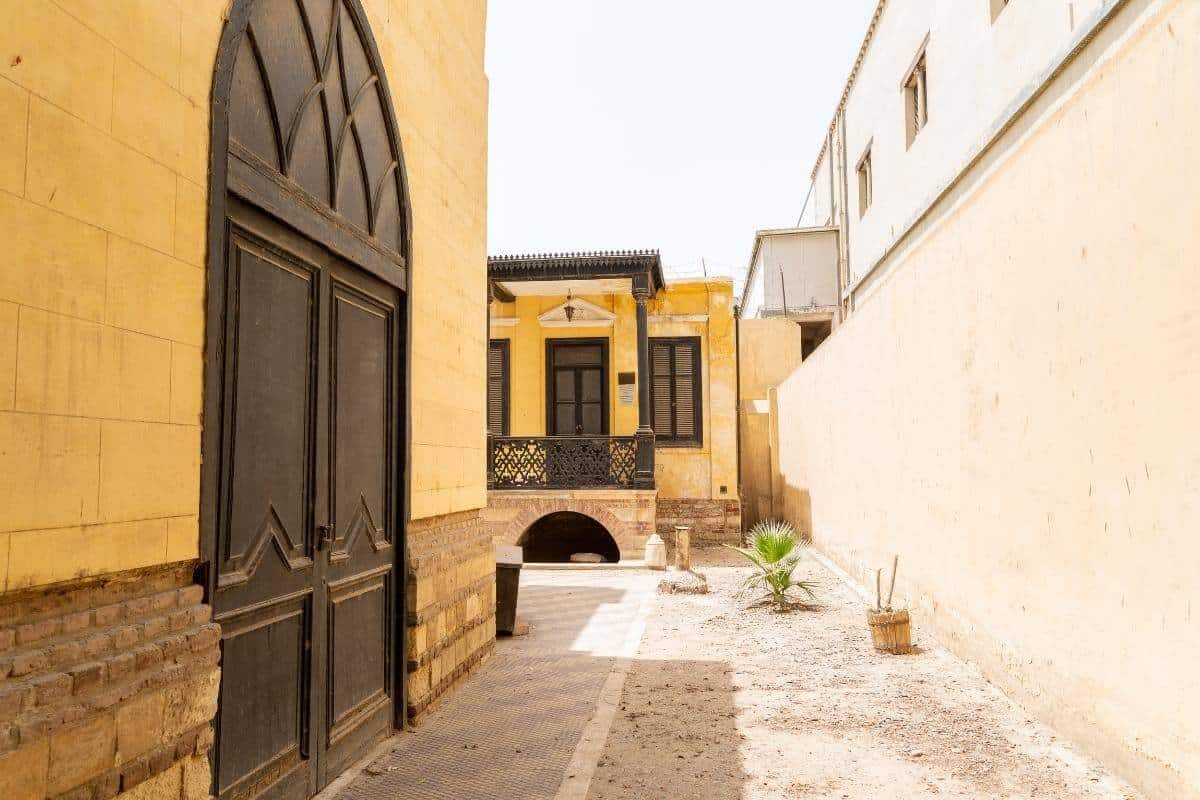
Most visitors combine a pyramids visit with several other key Cairo attractions. The Egyptian Museum in Tahrir Square houses the world’s largest collection of ancient Egyptian artifacts, including the treasures of Tutankhamun’s tomb. The nearby Grand Egyptian Museum at Giza, once fully operational, will become the primary museum for these collections.
Other essential stops include the Khan El Khalili Bazaar in Islamic Cairo, the Hanging Church in Coptic Cairo, and the ancient capital of Memphis and Saqqara Necropolis — home to the Step Pyramid of Djoser, the world’s oldest large-scale stone structure, predating the Giza pyramids by approximately 70 years.
Our detailed guide on the best things to do in Cairo covers all of these sites with planning advice and insider tips.
Recommended Egypt Tours That Include the Pyramids of Giza
Visiting the pyramids as part of an organized tour eliminates the stress of logistics, provides expert Egyptologist guides, and typically includes skip-the-line access. Here are top-rated options from One Nation Travel:
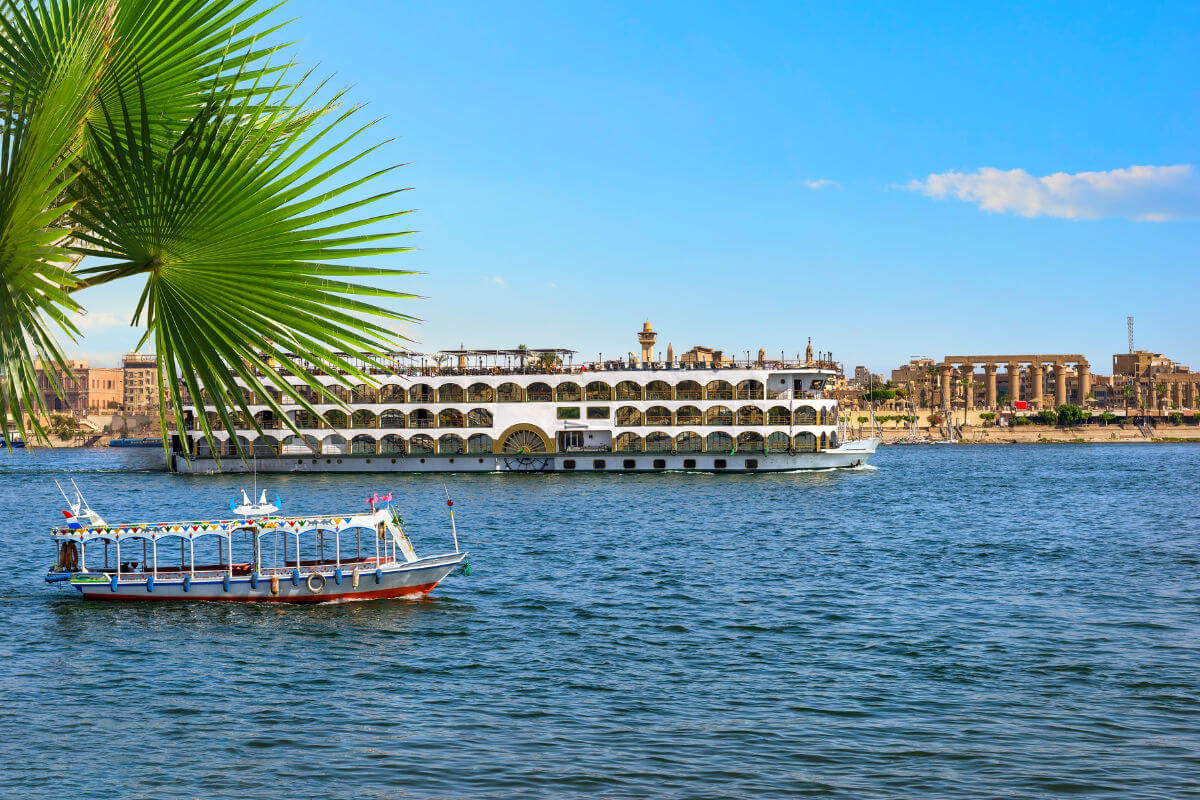
- 7-Day Egypt Tour: Explore Pyramids & Nile Cruise — Covers Cairo, Giza, Aswan, and Luxor with a multi-day Nile cruise. Ideal for first-time visitors who want a comprehensive experience.
- 8-Day Egypt Highlights with Nile Cruise — Includes Cairo, Aswan, Luxor, and Alexandria, combining the pyramids with Egypt’s Mediterranean coast and the temples of Upper Egypt.
- 5-Day Egypt Tour: Cairo and Luxor Highlights — A shorter itinerary perfect for travelers with limited time who want to see the pyramids, the Valley of the Kings, and Karnak Temple.
- 10-Day Egypt and Jordan Grand Tour — Combines the pyramids with Petra, Wadi Rum, and the Dead Sea for a two-country Middle Eastern adventure.
To understand how many days your Egypt itinerary truly needs, check out our analysis of how many days are enough to see Egypt.
Frequently Asked Questions About the Pyramids of Giza
How old are the Pyramids of Giza?
The Pyramids of Giza are approximately 4,500 years old. The Great Pyramid of Khufu, the oldest and largest, was completed around 2560 BCE. The Pyramid of Khafre followed around 2520 BCE, and the Pyramid of Menkaure around 2490 BCE.
Can you go inside the Pyramids of Giza?
Yes, visitors can enter the Great Pyramid of Khufu and the Pyramid of Khafre for an additional fee. The interior passageways are narrow, steep, and not air-conditioned, so they are not recommended for anyone with claustrophobia or mobility issues. Only 300 visitors per day are permitted inside the Great Pyramid.
How long does it take to visit the Pyramids of Giza?
A thorough visit to the Giza Plateau, including the three main pyramids, the Great Sphinx, and the panoramic viewpoint, typically takes 3 to 4 hours. Add another hour if you plan to enter one of the pyramids or take a camel ride. Most organized tours allocate a half-day for the site.
Are the Pyramids of Giza safe to visit?
Yes, the Giza Plateau is one of Egypt’s most heavily secured tourist sites, with a dedicated tourist police presence. Standard travel precautions apply: be aware of persistent vendors and unofficial “guides” who may approach you near the entrance. Booking a guided tour is the most hassle-free approach. Read our full guide on how to travel safely in Egypt for detailed safety advice.
What is the best month to visit the Pyramids?
November through February offers the most comfortable weather, with daytime temperatures between 18°C and 22°C (64°F to 72°F). October and March are also excellent, with slightly warmer conditions and thinner crowds compared to peak winter months.
Start Planning Your Visit to the Pyramids
The Pyramids of Giza have inspired travelers for millennia, and seeing them in person remains one of the most powerful travel experiences available anywhere in the world. Whether you’re drawn to the engineering mysteries, the ancient history, or simply the sheer scale of human ambition carved in stone, this is a destination that delivers on every expectation.
Ready to see the pyramids for yourself? Start planning your Egypt trip with One Nation Travel — our team builds custom private itineraries with expert Egyptologist guides, flexible dates, and all logistics handled from arrival to departure. Tell us your dates and interests, and we’ll design the perfect journey.