

The practical answer: Pamukkale’s hot springs are worth visiting for the bright white travertine terraces, shallow thermal channels, and the ancient spa city of Hierapolis above them. Plan at least 3–5 hours, walk barefoot only in designated terrace areas, and avoid treating the site as one large swimming pool. An overnight stay or a well-timed tour makes the experience much less rushed.
Pamukkale works best for travelers who want a memorable natural landmark with genuine historical context—not just a quick photo stop. The key decision is whether to visit as a day trip or stay nearby long enough to enjoy the terraces outside the busiest part of the day, then explore Hierapolis at a comfortable pace.
What to Know Before You Go
- Allow 3–5 hours for the travertines, Hierapolis ruins, and an optional swim at Cleopatra’s Antique Pool.
- Visitors must remove shoes in the designated travertine walking areas; the wet limestone can be uneven and slippery.
- Early morning and late afternoon are generally more comfortable for photos, glare, and heat than midday.
- The site entrance covers Pamukkale and Hierapolis, while Cleopatra’s Antique Pool is normally a separate paid activity.
- Most terraces are protected. Expect shallow channels and designated pools rather than unrestricted swimming.
- Pamukkale pairs especially well with Ephesus, Izmir, Antalya, Cappadocia, or Istanbul when transportation is planned in the right order.
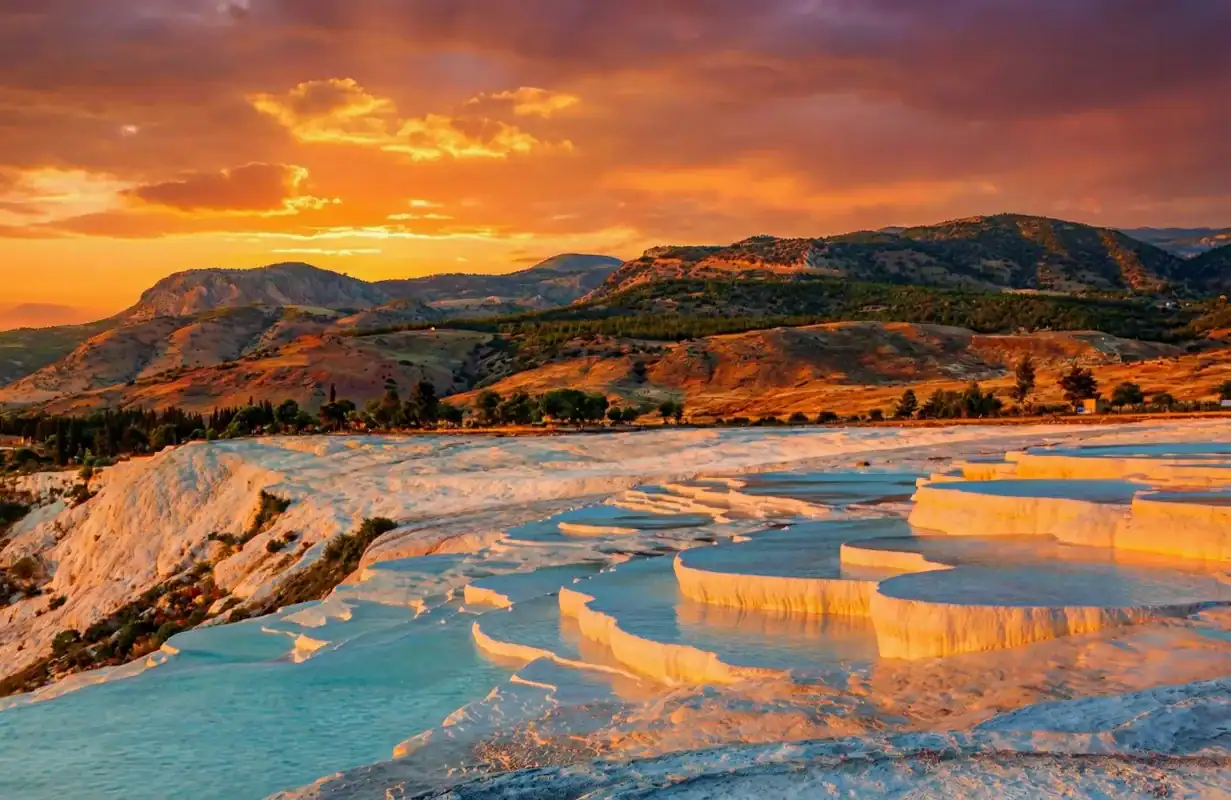
What Are the Pamukkale Hot Springs?
Pamukkale means “Cotton Castle” in Turkish, a name inspired by the white calcium terraces flowing down the hillside. Mineral-rich water rises from underground springs and leaves calcium carbonate deposits as it cools, gradually creating the layered basins and brilliant white formations visitors see today.
The terraces are part of a larger landscape that includes Hierapolis-Pamukkale, an ancient city built around the area’s thermal waters. Roman-era visitors came here to bathe, recover, socialize, and spend time in a major spa center. That connection between water, landscape, and archaeology is what makes Pamukkale more rewarding than a short stop for photos.
It helps to arrive with realistic expectations. Pamukkale is not a natural water park, and it is not possible to enter every white basin you see in photographs. Protected sections may be dry or closed, depending on preservation work and water management. The visitor experience centers on walking barefoot through designated channels and shallow pools while respecting the marked route.
How Do You Walk the Travertines Properly?
The main practical rule is simple: take your time. The white surface is beautiful but can feel slick underfoot, especially where water is flowing. Shoes are not allowed on the designated travertine walking route, so bring a lightweight bag to carry sandals or sneakers.
- Wear easy-to-remove footwear: Sandals or slip-on shoes are more convenient than boots or lace-up hiking shoes.
- Carry your shoes: Bring a small day bag rather than trying to manage shoes, a phone, and a water bottle in your hands.
- Use marked areas only: Closed terraces are protected for conservation and should not be entered.
- Take short steps: The surface varies between rough calcium, smooth stone, shallow water, and uneven edges.
- Protect against glare: Sunglasses, sunscreen, and a hat matter even in cooler months because the white ground reflects strong light.
- Keep electronics dry: A zip pouch or dry bag is useful for phones, passports, and cameras.
Practical tip: Don’t rely on water shoes for the terrace route. Since footwear is generally not permitted on the travertines, plan to walk barefoot and save your sandals for before and after the designated section.
Travelers with limited mobility, balance concerns, or foot sensitivity should be especially realistic about the experience. There are easier viewpoints and paths around the site, but the barefoot terrace walk itself may not suit everyone. It is worth asking about the day’s accessible route when arranging transportation or a guided visit.
What Does Pamukkale Cost?
Budget for three separate categories: site admission, optional swimming, and transportation. The Travertines of Pamukkale and Hierapolis are visited under the main archaeological-site admission. The fee can change, so confirm the current official amount shortly before travel rather than relying on an old blog post, social-media video, or travel forum.
Cleopatra Antique Pools in Pamukkale, also known as Cleopatra’s Antique Pool, is normally an additional charge. Food, drinks, lockers, transfers, and optional guided services may also be separate unless clearly listed as included in a tour or package.
| Expense | What to Expect | What to Confirm |
|---|---|---|
| Site admission | Access to the Pamukkale-Hierapolis visitor area | Current price, payment methods, and opening hours |
| Antique Pool | Optional paid swim among submerged ancient fragments | Current fee, towel or locker arrangements, and pool hours |
| Transport | Transfer, rental car, bus, domestic flight, or organized tour | Pickup point, luggage handling, return timing, and airport connections |
| Food and drinks | Cafes and restaurants in or near the visitor area | Whether lunch is included in your tour day |
For an organized option, the Pamukkale & Hierapolis Full-Day Tour from Izmir starts from USD 129, while the 2-Day Pamukkale & Ephesus Tour from Istanbul with Flights starts from USD 470. These are starting prices and can change; always review the tour page for the current inclusions and date-specific details before booking.
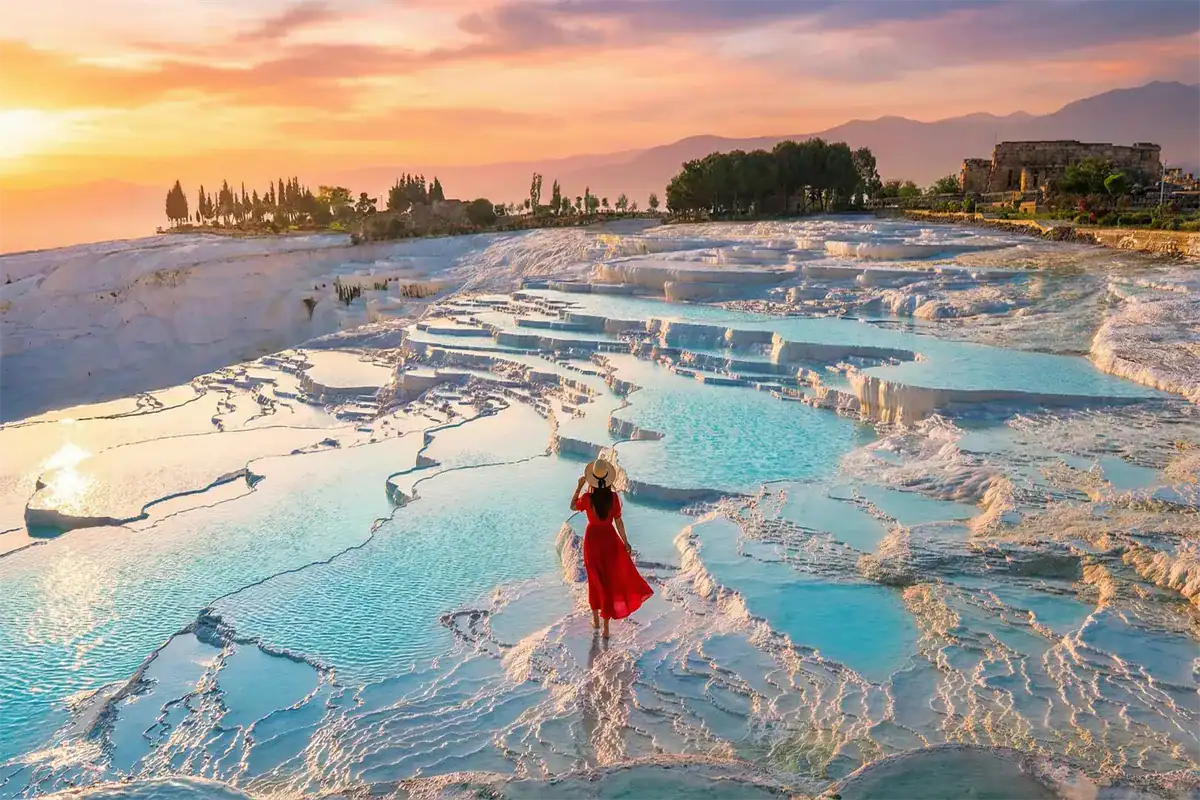
A Comfortable 3–5 Hour Pamukkale Route
A good visit has a natural rhythm: see the terraces before your energy drops, add the pool only if it appeals to you, then give the ruins the time they deserve. Trying to squeeze everything into an hour usually means missing Hierapolis, rushing through the terrace route, and leaving when the site is starting to make sense.
First Hour: Travertines and Views
Start with the designated terrace route. Move slowly, take your photos, and do not assume the brightest white sections are always the ones open for walking. The appeal is as much about the changing views across the valley as it is about standing in the water.
Second Hour: Antique Pool or a Break
If swimming at Cleopatra’s Antique Pool is part of your plan, this is a sensible point to do it. The water is generally warm rather than intensely hot, and the submerged columns create an unusual setting. It is best viewed as a fun add-on, not a quiet spa escape. During busy periods, some travelers prefer to skip the pool and spend more time in the ruins instead.
Final 1–2 Hours: Hierapolis
Continue through the ancient city, where the remains of baths, streets, gates, and tombs explain why this location became important in antiquity. The theater is particularly worthwhile if you have the time and are comfortable walking uphill. The Necropolis of Hierapolis is also striking for travelers interested in the scale of the ancient spa city.
Keep water with you, especially from late spring through early fall. The site has limited shade in many areas, and the combination of reflected light, heat, walking, and bare feet can be more tiring than it looks on a map.
When Is the Best Time to Visit Pamukkale?
For many travelers, April through June and September through October offer the most comfortable balance of temperatures and sightseeing conditions. Summer can still be rewarding, but midday heat and strong glare make the terrace walk less pleasant. Winter visits can be quieter and atmospheric, although weather conditions are more variable.
| Timing | Best For | Trade-Off |
|---|---|---|
| Early morning | Lower crowds, softer light, cooler walking conditions | Requires an overnight stay nearby or an early arrival |
| Midday | Travelers on fixed day-trip schedules | More glare, more heat, and typically more visitors |
| Late afternoon | Better light and a less hurried atmosphere | Requires careful attention to site closing times and onward transport |
An overnight stay in the Pamukkale area offers the most flexibility. You can enter earlier, take a rest during the hottest part of the day, and avoid building your entire visit around a long transfer. If you only have one day, a coordinated itinerary can still work well—but your pickup, luggage, meal break, and departure point need to be clear.
For broader route planning, see how to get to Pamukkale from Istanbul for transport options and common timing mistakes, or review the Pamukkale Day Trip Guide 2026 for a closer look at planning a single-day visit.
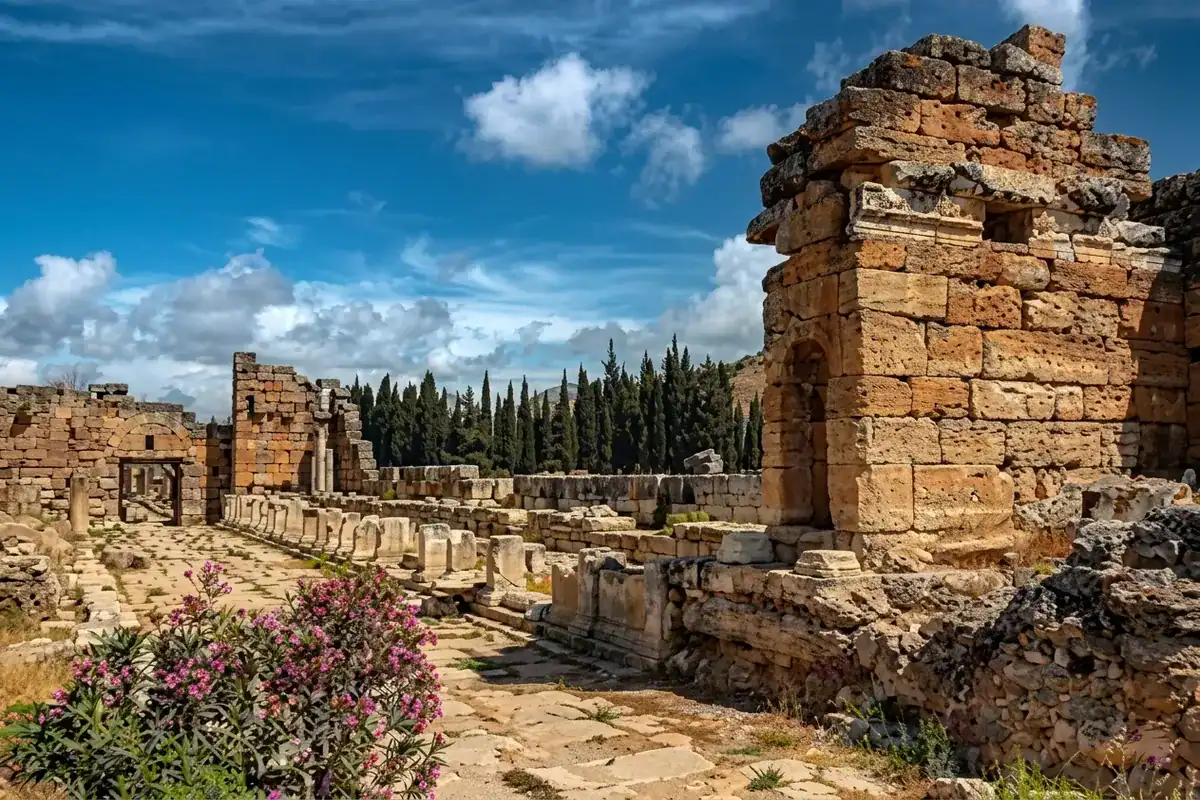
Should You Combine Pamukkale with Ephesus?
For most first-time visitors to western Turkey, Pamukkale and Ephesus are one of the strongest combinations. Pamukkale provides the thermal landscape and Roman spa history; Ephesus adds a much larger ancient urban site, including the imposing Great Theatre of Ephesus.
The combination makes particular sense if you are arriving from Istanbul or Izmir and want to see more than one major landmark without zigzagging across the country. It does, however, require sensible route planning. Pamukkale is not next door to Ephesus, so confirm whether your itinerary includes transfers, an overnight hotel, domestic flights where applicable, guided touring, and the right end point for your next destination.
Travelers with more time can continue toward the Aegean coast, Antalya, or Cappadocia. If you are building a countrywide route, the Best Turkey Itinerary for 7 Days is useful for understanding how Pamukkale fits alongside Istanbul, Cappadocia, and Ephesus without overloading every day.
Choose the Pamukkale Visit That Fits Your Trip
Choose a day trip if your time is tight
A day trip is a practical choice when you are based in Izmir or Kuşadası, or when Pamukkale is one stop within a pre-arranged route. It suits travelers who are comfortable with an earlier start and a structured schedule. Before booking, verify pickup location, approximate return time, whether entrance fees are included, and how much independent time you will have at the terraces and Hierapolis.
Choose an overnight stay if Pamukkale is a priority
Stay overnight if photography, a slower pace, or avoiding the strongest heat matters to you. This option is especially helpful for travelers who want to visit the terraces at a quieter time, include Cleopatra’s Antique Pool without rushing, and explore Hierapolis beyond its central highlights.
Choose a multi-day route if you want Ephesus too
A two- or three-day route is usually the better decision if Ephesus is already on your wish list. It reduces the temptation to cram two major sites into one exhausting day and can simplify hotel, transfer, and flight coordination. Compare each itinerary carefully: “from” prices, flights, meals, hotel nights, airport transfers, and site admissions should all be checked on the booking page before payment.
Choose independent travel only if you can manage the logistics
Independent travel can be rewarding for confident planners, particularly if you have a rental car or flexible schedule. The challenge is not finding Pamukkale; it is connecting transport arrival times with site access, luggage storage, meals, return journeys, and possible onward travel to Ephesus or Istanbul. A pre-arranged tour is often the simpler choice when you have limited days in Turkey.
Choose your next step
Recommended Pamukkale tours
These verified options are the closest available matches for this article’s destination, route intent, and trip length.
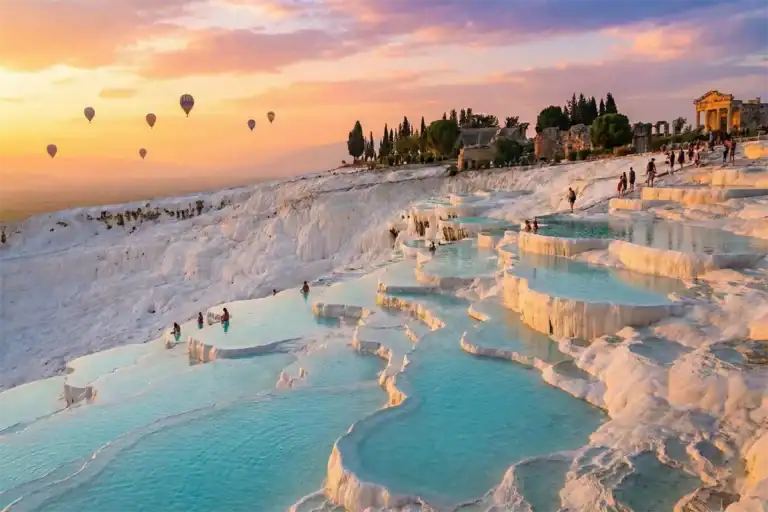
2-Day Pamukkale & Ephesus Tour from Istanbul with Flights
A 2 days Historical & Cultural Tour route covering Pamukkale, Ephesus and 1 more destination.
View tour details →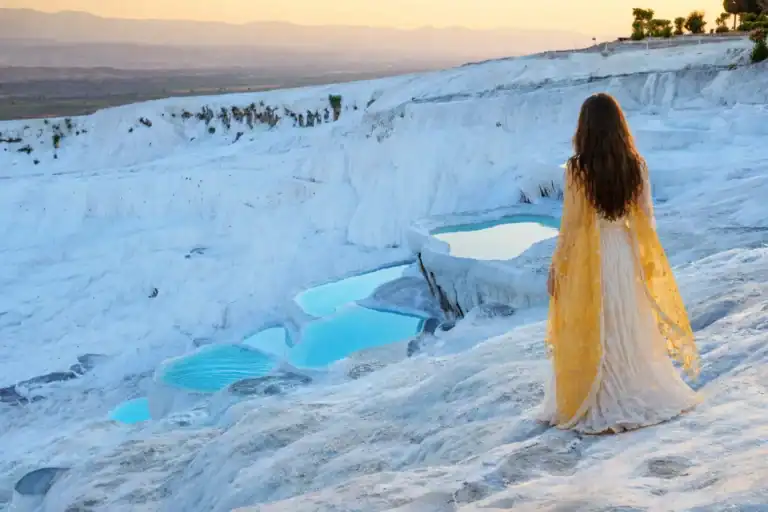
Pamukkale & Hierapolis Full-Day Tour from Izmir
A 13 hours Cultural & Heritage Tour route covering Pamukkale, Izmir.
View tour details →
3-Day Pamukkale & Ephesus Tour from Izmir
A 3 days Cultural & Heritage Tour route covering Pamukkale, Ephesus and 1 more destination.
View tour details →
3-Day Pamukkale, Ephesus, Troy, and Gallipoli Tour from Istanbul
A 3 days Cultural & Heritage Tour route covering Pamukkale, Ephesus and 3 more destinations.
View tour details →Common Pamukkale Questions
Can you swim in the Pamukkale terraces?
Swimming is not permitted freely throughout the terraces. Visitors can walk barefoot through designated shallow water channels and open areas, while many formations remain protected. For a deeper swim, Cleopatra’s Antique Pool is the main paid option within the site.
Is Cleopatra’s Antique Pool worth paying for?
It is worth considering if you enjoy warm mineral water and the novelty of swimming around ancient fragments. Skip it if you are short on time, dislike busy pools, or would rather spend that time exploring Hierapolis and the theater.
What should I wear at Pamukkale?
Wear comfortable clothing, easy-to-remove sandals, sunglasses, a hat, and sunscreen. Bring a small towel and swimsuit if you plan to use Cleopatra’s Antique Pool. Keep shoes and valuables in a lightweight bag while walking the travertines.
Is Pamukkale suitable for children?
Yes, provided children are supervised closely on the wet limestone. The barefoot walk can be slippery, the sun can be intense, and the ruins involve uneven ground. A shorter visit with regular water and shade breaks is usually more enjoyable for families.
Plan Pamukkale for the Right Pace
Pamukkale is at its best when you allow enough time to understand both sides of the place: the white thermal terraces below and the ancient spa city above. Prioritize a sensible arrival time, bring the right basics, and decide in advance whether Cleopatra’s Antique Pool is worth your time and budget.
If you would like help fitting Pamukkale into a wider Turkey route with flights, transfers, Ephesus, or an overnight stop, share your travel dates and priorities through Plan My Trip. One Nation Travel can help coordinate a route that gives Pamukkale the time it deserves.