
The practical answer: Turkey uses the Turkish lira (TRY, ₺). For most visitors, the best approach is to pay by card where it is accepted, withdraw or exchange a modest amount of lira for daily cash needs, and always choose to be charged in TRY rather than your home currency. Rates move frequently, so check a live conversion app instead of relying on fixed exchange-rate examples.
Understanding Turkish currency is less about memorizing exchange rates and more about avoiding expensive conversion choices, carrying the right amount of cash, and knowing where cards may not work. That matters whether you are spending a few days in Istanbul, shopping at local markets, or traveling through smaller towns on a longer Turkey tour.
What Travelers Should Know About Turkish Money
- The official currency is the Turkish lira, abbreviated TRY and written with the ₺ symbol.
- Exchange rates can change quickly. Use a live app such as your bank app, Wise, or XE before making a large purchase or exchanging cash.
- Visa and Mastercard are commonly accepted in cities, hotels, larger restaurants, and many attractions, but cash still matters for small purchases and rural stops.
- When an ATM or card terminal offers to charge you in U.S. dollars, USD, pounds, or another home currency, choose TRY instead.
- Airport exchange counters are convenient for a small arrival amount, but city exchange offices and bank ATMs are often better choices for routine spending.
- Keep smaller notes available for taxis, tips, market purchases, and inexpensive meals.
What Is the Currency in Turkey?
The official currency of Turkey is the Turkish lira (TRY). Its symbol is ₺. One lira is divided into 100 kuruş, although travelers will mostly use whole-lira prices and notes.
Common banknotes are 5, 10, 20, 50, 100, and 200 lira. Coins include 1, 5, 10, 25, and 50 kuruş, plus 1-lira coins. Small notes are particularly useful. A 200-lira note may be perfectly normal, but a street-food stand, taxi driver, or small neighborhood shop may not have enough change early in the day.
Do not plan a trip around a published “typical” dollar-to-lira rate. The lira’s value can move noticeably over time, and the rate you actually receive depends on your card issuer, ATM provider, exchange office, and any fees involved. Check the mid-market rate shortly before you travel, then compare it with the rate and fees offered at the point of payment.

Cash, Cards, and Contactless Payments in Turkey
Turkey is a card-friendly destination, especially in Istanbul, Ankara, Izmir, Antalya, and major visitor areas. International Visa and Mastercard cards are commonly accepted at hotels, museums, restaurants, supermarkets, shopping centers, and many ticket offices. Contactless payment is also common when a terminal supports it.
Still, cash is not obsolete. Travelers should carry enough lira for situations where card acceptance is limited or inconvenient:
- Small family-run cafés and local bakeries
- Market stalls and some souvenir vendors
- Street food, public restrooms, and small tips
- Some taxis and drivers, particularly outside major city centers
- Small towns, village stops, and rural sightseeing routes
Apple Pay, Google Pay, and other mobile wallets should be treated as a backup rather than your only payment method. Whether they work depends on your home bank, card network, phone settings, and the individual payment terminal. Bring at least one physical card, ideally with no foreign-transaction fee, plus a second card stored separately.
Use Turkish lira at card terminals
If a card machine asks whether you want to pay in TRY or your home currency, select TRY. The alternative is usually dynamic currency conversion, where the merchant’s payment provider sets the exchange rate. It may feel convenient because you immediately see a familiar currency, but it is often less favorable than letting your own card network convert the transaction.
Practical rule: Pay in lira, withdraw lira, and compare the final cost on your bank statement. The only exception is when your card issuer specifically advises otherwise.
Where Should You Exchange Money in Turkey?
You have four practical options: withdrawing lira from an ATM, using a licensed exchange office called a döviz bürosu, exchanging at a bank, or exchanging a small amount at the airport. The best option depends on your arrival time, fees, and how much cash you genuinely need.
Choosing the Right Way to Get Lira
| Option | Best for | Advantages | What to watch for |
|---|---|---|---|
| Bank ATM | Travelers with a low-fee debit card | Convenient, widely available, no need to carry foreign cash | Your bank and the Turkish ATM operator may both charge fees; decline currency conversion offers |
| Licensed exchange office | Travelers carrying U.S. dollars, USD, or pounds | Easy to compare rates in central neighborhoods and tourist areas | Check the final amount of lira before handing over cash; rates can vary by location |
| Bank branch | Travelers who prefer a formal transaction | Established institutions and clear procedures | Hours, queues, document requirements, and service fees can make this less convenient |
| Airport counter or ATM | Late arrivals and immediate transfer needs | Useful when you need a small amount right away | Exchange rates may be less favorable than in town |
For most travelers, a sensible plan is to arrive with one working payment card, obtain a modest amount of lira after landing if needed, and handle larger cash needs later in the city. Before using an ATM, confirm your bank’s international withdrawal fee, daily withdrawal limit, and whether it reimburses operator fees. If using an exchange office, compare the posted buy/sell rate and ask whether any commission applies.
Use ATMs attached to a bank branch or located inside a well-trafficked mall, airport, or hotel area. Shield your PIN, examine the card slot and keypad for anything unusual, and avoid accepting assistance from strangers. It is also wise to enable transaction notifications on your banking app before departure.

How Much Cash Should You Carry?
There is no ideal lira amount for every traveler. It depends on your route, your comfort with card payments, and whether you are joining an organized itinerary. In Istanbul and other large cities, you can often manage most major expenses by card. On a multi-city route, cash becomes more useful for smaller meals, local transport, incidental purchases, and tips.
A good working approach is to avoid converting a large amount on day one. Carry enough for the first day’s meals, local transport, and small purchases, then top up only when needed. This reduces the amount of unused lira you may have at the end of the trip and limits the impact of a lost wallet.
Planning your daily spending
Prices vary widely by city, neighborhood, season, and travel style. A meal in a local restaurant, admission to a major attraction, a taxi ride, and a souvenir can all have very different price points. Tourist-heavy districts may also be more expensive than residential areas a short distance away.
For better budget control, separate your spending into three categories:
- Prepaid trip costs: accommodations, guides, transfers, domestic flights, and admission arrangements included in your confirmed itinerary.
- Expected daily costs: meals not included, drinks, local transportation, optional activities, and tips.
- Flexible purchases: shopping, premium dining, spa visits, private transfers, and last-minute experiences.
Review exactly what is included before comparing tour prices. A lower headline price can leave more daily expenses to cover locally, while a more inclusive itinerary can make your cash planning easier. Travelers choosing an independent trip will also find useful practical guidance in Turkey Travel Tips 2026: 20 Things to Know Before You Go.
Tips, Taxis, Markets, and Everyday Payments
Tipping is appreciated in Turkey, but it is not a rigid percentage-based system in every situation. Small cash tips are practical because staff may not be able to add a tip through a card terminal. For restaurant service, travelers often round up or leave an amount that reflects the service and bill total. For guides, drivers, hotel porters, and spa staff, the appropriate amount depends on the service level, group size, and whether tips are already addressed in your travel documents.
If you are traveling on a guided tour, ask your trip coordinator whether gratuities are included or suggested. That avoids duplicate tipping and helps you carry suitable small notes.
Taxis and local transportation
Before entering a taxi, confirm that the meter will be used or agree on the fare where that is customary. Keep small lira notes available and ask for a receipt if one is offered. If using a ride-hailing or taxi app, verify the payment method and final fare in the app rather than assuming a foreign card will always be accepted.
Shopping and bargaining
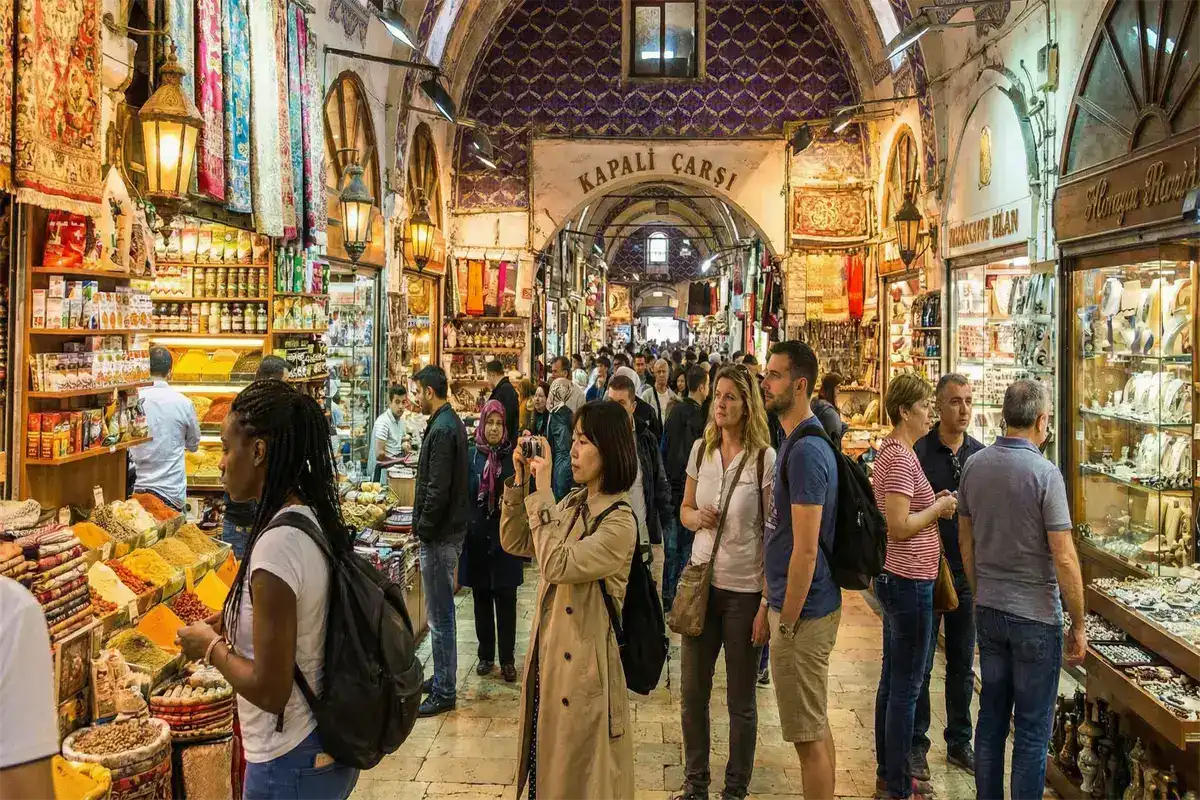
Bargaining can be part of the experience at independent market stalls and some souvenir shops, including the Grand Bazaar and the Spice Bazaar in Istanbul. It is not expected in supermarkets, museums, department stores, cafés with printed menus, or most established retail shops.
Keep the conversation friendly, know your maximum price before you start, and be prepared to walk away politely. Do not feel obliged to buy something simply because you have discussed a price. For high-value items such as carpets, jewelry, antiques, or ceramics, request an itemized receipt, understand return and shipping arrangements, and use a traceable payment method when possible.
Common Turkish Currency Mistakes to Avoid
- Exchanging all your money at the airport: Convenience is useful after arrival, but exchange only what you need until you can compare options.
- Accepting dynamic currency conversion: Choose TRY at ATMs and payment terminals unless you have a specific reason not to.
- Relying on one card: Carry a backup card separately in case your primary card is blocked, damaged, or not accepted.
- Ignoring ATM fees: A favorable exchange rate can be offset by home-bank and local operator charges, particularly on small withdrawals.
- Using unofficial money changers: Stick with established banks, licensed exchange offices, and reputable ATMs.
- Leaving cash planning until a rural travel day: Get small notes before heading to smaller towns, long driving routes, or local markets.
- Forgetting to check your bank settings: Tell your bank you are traveling if required, confirm international use is enabled, and set transaction alerts.
One more useful detail: keep receipts for large exchanges or significant purchases until the end of the trip. They can help you track spending, resolve a card issue, or make sense of remaining cash before departure.
Planning a Turkey Trip Without Currency Surprises
Currency planning is easiest when your route and included services are clear. A shorter itinerary focused on Istanbul and Cappadocia generally involves fewer cash-only situations than a longer overland trip that adds markets, coastal towns, and rural sightseeing stops. Travelers considering independent versus arranged travel can compare the trade-offs in Group Tour vs Private Tour in Turkey: Which Option Is Right for You?.
For travelers who want major transport and sightseeing logistics organized in advance, these verified itineraries provide a clear starting point:
- 5-Day Istanbul & Cappadocia Tour with Domestic Flights — from USD 1,090; a focused choice for first-time visitors with limited time.
- 7-Day Istanbul, Pamukkale, Ephesus & Cappadocia Tour with Flights — from USD 1,418; suited to travelers who want the classic highlights with domestic-flight routing.
- 10-Day Highlights of Turkey: Istanbul, Ephesus, Pamukkale, Antalya & Cappadocia — from USD 1,640; a broader route for travelers who prefer more time across several regions.
Read each itinerary’s inclusions, exclusions, hotel details, optional activities, and flight arrangements before booking. This is especially important when comparing packages: airport transfers, meals, entrances, domestic flights, and tips can affect how much lira you will need during the trip. For route ideas before selecting a package, see the Ultimate 10-Day Turkey Itinerary.

Turkish Currency Questions Travelers Ask
Can I use U.S. dollars or USD in Turkey?
Some hotels, tour businesses, and tourist-oriented shops may quote prices in dollars or USD, but everyday purchases are best made in Turkish lira. Paying in TRY usually gives you clearer pricing and avoids an unfavorable conversion chosen by the merchant.
Should I exchange money before leaving home?
It can be useful to carry a small emergency amount, but many travelers get better flexibility by withdrawing or exchanging lira after arrival. Compare your home bank’s exchange rate and fees with the options available in Turkey.
Are ATMs safe in Turkey?
ATMs are generally practical when you use machines attached to established bank branches or secure public locations. Protect your PIN, decline conversion into your home currency, and review your banking alerts after each withdrawal.
Do I need cash in Istanbul?
Yes, but not a large amount. Cards are widely used in Istanbul, yet small lira notes remain useful for taxis, markets, snacks, tips, and places that do not accept foreign cards.
What is the best card to use in Turkey?
A Visa or Mastercard with no foreign-transaction fee is often the most practical option. Bring a second card from a different account or issuer as backup, and verify both cards are enabled for international transactions.
Make Every Lira Work Harder
The simplest strategy is to use cards for larger purchases, keep a sensible amount of lira for daily cash expenses, and check live rates before exchanging money or approving a conversion. Avoid trying to predict the lira months in advance; focus instead on fees, payment choices, and a realistic daily budget.
If you would like help matching a Turkey route, pace, and level of included services to your budget, plan your Turkey trip with One Nation Travel.