
MOROCCO / THE MARRAKECH STAY GUIDE
Where to Stay
in Marrakech
A courtyard riad, a city hotel or a palm-fringed retreat? Find the right neighborhood and the stay that fits your trip.
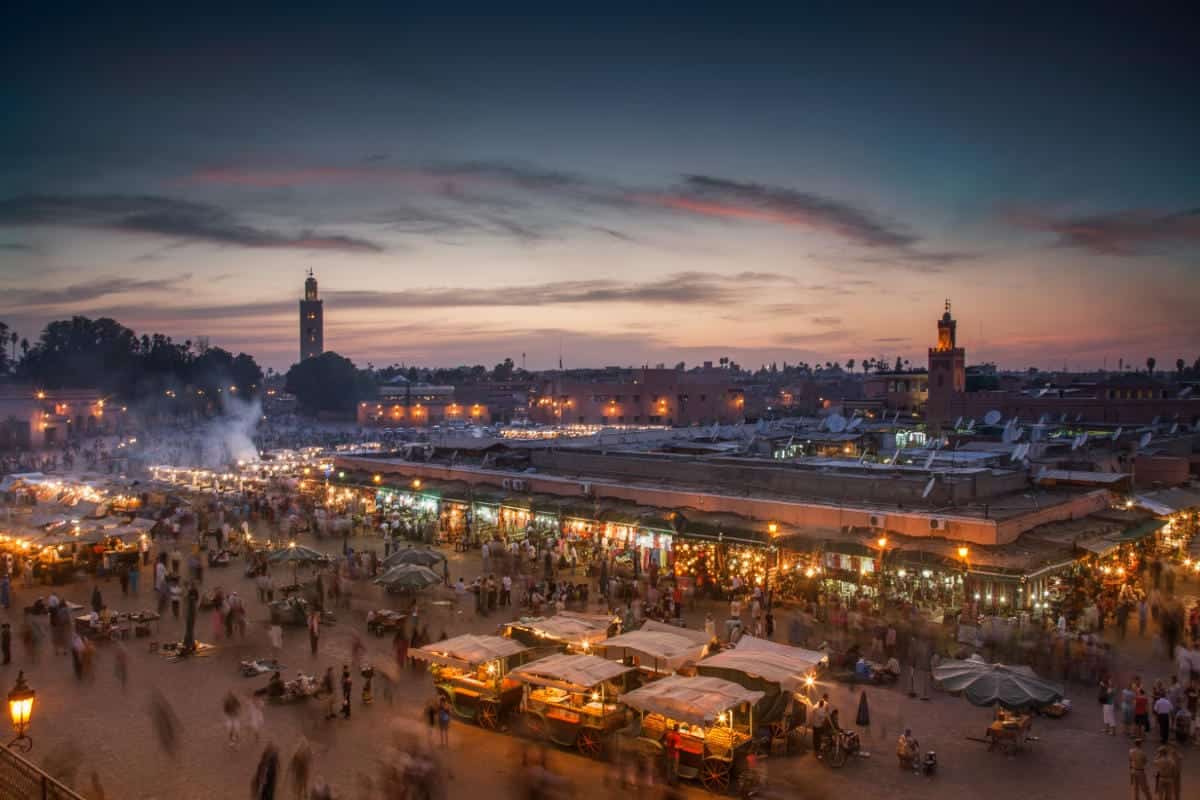
Jemaa el-Fnaa at dusk · Marrakech, Morocco
START WITH THE WAY YOU TRAVEL
Choose your base.
Then choose your room.
For a first visit focused on the old city, start with a riad in the medina. For cafés, easier taxi access and a modern hotel, compare Guéliz. For a hotel with gardens or a pool, look at Hivernage; for a resort-led stay, consider the Palmeraie.
The exact address matters as much as the district. Check the arrival route, room layout and facilities before you commit.
ONE CITY, DIFFERENT WAYS TO STAY
The best areas to stay in Marrakech
Choose the rhythm you want, then look closely at the street and the property.
Northern medina
Mouassine · Dar el Bacha · Bab Doukkala
A useful starting point for riads, souks and exploring the old city. Look for a clearly described walking route from a vehicle-accessible meeting point.
Before you bookNoise varies by lane and room. A “medina location” does not tell you the walking distance to every sight.
Jemaa el-Fnaa & central medina
The square and surrounding lanes
Consider this area if you want the square, market streets and evening activity close by. A side-street riad can feel very different from a room facing a busy route.
Before you bookAsk about evening noise and the route back after dark. Check the room position, not just the map pin.
Kasbah & southern medina
Around Bab Agnaou and the Saadian Tombs
A good area to compare if the southern medina is central to your plans. Riads here offer an alternative to staying around the main square.
Before you bookConfirm the walk to your chosen sights and the nearest taxi access; not every entrance is reachable by car.
Guéliz
Marrakech’s modern city center
A different side of Marrakech, with shops, restaurants and a broader choice of modern accommodation. Useful if you prefer a street address that is easier to reach by taxi.
Before you bookAllow for journeys to the old city. Lifts, parking, quiet rooms and pools depend on the hotel.
Hivernage
West of the medina
Compare individual hotels here if gardens, a spa or swimming time matter alongside sightseeing. It can suit travelers who want to return to a larger hotel after a busy day.
Before you bookCheck pool size, heating and opening hours. Nearby restaurants, traffic or nightlife can affect quiet rooms.
Palmeraie
Palm-grove area beyond the center
Worth considering when time at the property is a main part of the holiday. Prioritize the resort’s facilities and dining options when comparing stays.
Before you bookPlan transport for city visits. Check transfer costs, shuttle schedules and the precise location before booking.
THE BIG DECISION
Riad or hotel? Compare the everyday details.
A riad is traditionally a home organized around an inward-facing courtyard or garden. Many now welcome guests. The word describes a style of property, not a guarantee of luxury, silence or a swimming pool.
| What matters | Medina riad | City hotel or resort |
|---|---|---|
| Atmosphere | Courtyard character and a smaller, more intimate setting. | A wider range of styles, from compact city hotels to large resorts. |
| Arrival | May involve a walk from the nearest vehicle-accessible point. | Often easier vehicle access; confirm the entrance and parking. |
| Getting around | Good for old-city exploring, depending on the exact address. | You may use taxis for medina visits; resort locations vary widely. |
| Swimming | Some have plunge or rooftop pools; others have none. | Some offer larger pools, but a hotel booking does not guarantee one. |
| Stairs & access | Traditional layouts may have narrow stairs and no lift. | Lifts or accessible rooms may be available; ask about the full route. |
| Room comfort | Check natural light, privacy, courtyard noise and temperature control. | Check room position, street noise, air conditioning and amenities. |
| Best starting point | Travelers who want the stay itself to feel part of the old city. | Travelers prioritizing specific facilities, easier arrivals or resort time. |
Compare the total stay cost. Check your actual dates, room category, breakfast, transfers, taxes and cancellation conditions. See our guide to the best time to visit Marrakech before choosing your dates.
CHARACTER, WITH A FEW TRADE-OFFS
Is staying in a riad worth it?
What makes it special
- A courtyard can be a welcome pause from the market streets.
- Tilework, plaster, woodwork and terraces give many properties their character.
- A smaller property can make it easier to discuss arrival plans and local arrangements with staff.
- A well-chosen address lets you explore parts of the medina on foot.
What to check carefully
- Stairs between the entrance, bedroom, breakfast area and roof terrace.
- Sound from the courtyard, neighboring rooms and nearby lanes.
- Whether your room has the light, privacy, heating and cooling you want.
- Vehicle access, luggage assistance and late check-in arrangements.
For a short sightseeing stay, a riad is a strong option if the layout works for you. Families do not automatically need a hotel, and couples do not automatically need a riad: choose the room, facilities and access that suit your group.
LOOK BEYOND THE COURTYARD PHOTO
What makes a beautiful riad a good place to stay?
There is no universal “most beautiful” riad. A striking courtyard is only one part of the experience. Look for thoughtful restoration, a comfortable room and shared spaces you will actually use.
- Your actual roomAsk for photographs of the booked room category, its floor and where its windows face.
- A usable terraceCheck shade, seating, opening hours and the stairs to reach it.
- Comfort in your seasonConfirm in-room heating and air conditioning rather than relying on general facility icons.
- Recent guest experienceRead recent feedback for arrival assistance, maintenance and noise, as well as décor.
MAKE THE LOCATION WORK FOR YOU
Inside the medina, outside the walls, or a little of both?
The Medina of Marrakesh is a UNESCO World Heritage Site. Staying here puts the old city into your daily routine, but lanes, uneven surfaces and vehicle restrictions can make the final part of an arrival less straightforward.
For a short trip, one carefully chosen base usually keeps things simple. With more time, you could combine a medina stay with a hotel or resort for pool days. Factor in the extra transfer, check-in time and luggage storage rather than choosing two stays just for variety.
Planning a wider journey? Our 5-day Morocco itinerary helps you place Marrakech within a route, while what to wear in Morocco covers packing considerations.
A BETTER ARRIVAL STARTS HERE
Your Marrakech accommodation checklist
Arrival & luggage
Get the precise taxi drop-off and walking directions. Ask who will meet you, whether luggage help is available and what it costs.
Airport transfer
Ask for a quote and an estimate for your exact address and arrival time. Traffic and the final walk can add time; one airport journey estimate does not fit every district.
Room & access
Confirm bed configuration, occupancy, stairs, lift access and bathroom layout. Request specific measurements or photographs if needed.
Pool & family needs
Check dimensions, depth, heating and child policies. Ask about barriers and supervision; a courtyard pool may be close to guest rooms.
Price & cancellation
Compare the final payable total, included meals, any local taxes, payment schedule and cancellation deadline before confirming.
Late arrival & departure
Confirm reception hours, how to contact the property, late check-in instructions and whether luggage storage is available after check-out.
MAKE MARRAKECH PART OF THE JOURNEY
Explore our Morocco tours
Check each tour’s route, accommodation, inclusions and current price. This guide does not promise a particular riad or hotel as part of a package.
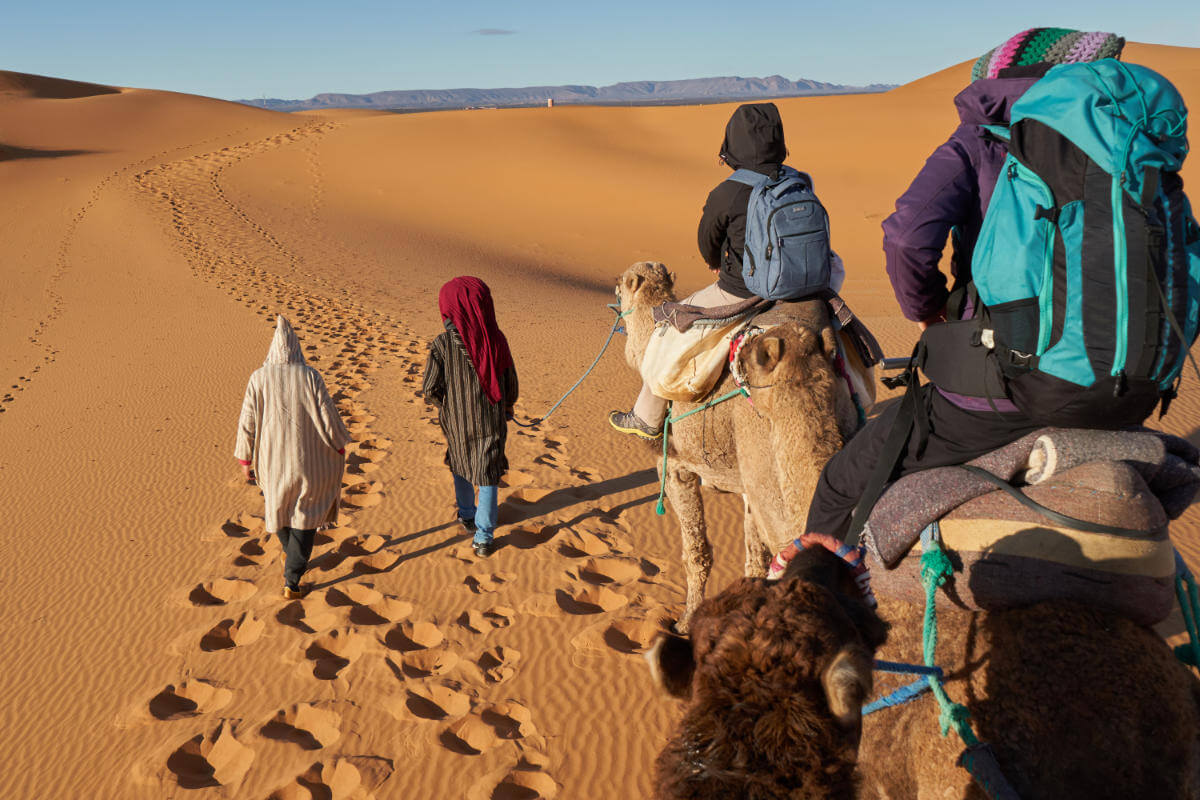
A compact Morocco route
5-Day Morocco Tour: Casablanca to Sahara & Marrakech

A longer multi-stop journey
9-Day Morocco Tour: Marrakech, Sahara Desert, Fez & Chefchaouen

A desert route ending in Marrakech
3-Day Private Desert Tour from Errachidia to Marrakech via Merzouga
BEFORE YOU CHOOSE
Marrakech stays: your questions answered
Is it better to stay in a riad or hotel in Marrakech?
Choose a medina riad if courtyard character and exploring the old city on foot are your priorities. Choose a hotel in Guéliz or Hivernage if easier vehicle access and modern facilities matter more. A pool, lift or accessible room is never guaranteed by the accommodation type: check the specific property.
What is the best area in Marrakech for a first visit?
The medina is a good starting point for a sightseeing trip. Compare Mouassine, Dar el Bacha and Bab Doukkala for northern medina bases, or the Kasbah for the southern old city. Choose an exact address with a clear arrival route; noise and walking distances can change from one lane to the next.
Is it worth staying in a riad in Marrakech?
Yes, if you value a smaller property and a courtyard setting. Before booking, check the room location, stairs, heating and air conditioning, and the walk from the taxi drop-off. A riad can be a memorable part of the trip, but its layout needs to suit you.
What is the most beautiful riad in Marrakech?
There is no single objective winner. Compare courtyard and room photographs, restoration details, natural light, terrace shade and recent guest feedback. Confirm that the photographs show the room category you are booking; a beautiful shared courtyard does not describe every bedroom.
Can a taxi reach a riad in the medina?
Sometimes, but many riads sit on lanes that vehicles cannot enter. Ask the property for the precise drop-off point, the walking route, whether staff can meet you and whether luggage assistance costs extra. Arrange late arrivals in advance.
Do all riads have a swimming pool?
No. Some have no pool, while others have a small plunge pool or a rooftop pool. Ask for the dimensions, depth, opening hours and whether it is heated for your travel dates. If daily swimming is a priority, compare confirmed facilities at individual hotels and resorts.
Where should families or travelers with limited mobility stay?
Guéliz and Hivernage can be useful places to start looking for vehicle access and larger hotels, but neither an area nor a star rating guarantees accessibility. Confirm the full route from the entrance to the room and bathroom, lifts, steps and any equipment you need. Families should also check room occupancy, child policies and pool barriers.
Should I split my stay between a riad and a hotel?
It can work well when you have enough time: spend the sightseeing part in the medina and the quieter part at a hotel or resort with the facilities you want. For a short stay, one well-chosen base avoids a second check-in and extra transfer. Confirm luggage storage and transport if you split the stay.
Updated October 23, 2026 · One Nation Travel
Destination references: UNESCO: Medina of Marrakesh · Marrakech tourism office: Guéliz. Facilities, rates and access should be confirmed with the accommodation.
YOUR MOROCCO JOURNEY
Find a route that fits your stay.
Compare our Morocco itineraries, or tell our team your dates, preferred pace and accommodation needs.