

Short answer: Most first-time visitors need 7 to 10 days in Egypt. Seven days can cover Cairo, the Pyramids of Giza, and a short Nile cruise; eight to 10 days gives you more room for transfers, recovery, and additional sightseeing. Choose five days for a focused Cairo-and-Luxor visit, or 12 to 14 days for deeper exploration and beach time. Count arrival and departure days separately from usable sightseeing days.
The important decision isn’t how many monuments you can fit into a week. It’s whether you want Cairo alone, Cairo plus Upper Egypt, or a broader vacation with time to rest. For travelers arriving after a long-haul flight, an extra night can be more valuable than another excursion.
Egypt’s classic route connects several cities, and a Nile cruise follows a sailing schedule rather than your preferred departure time. Choose the route and check those connections before committing to international flights.
Key Takeaways

- Five days means choosing: Cairo plus Luxor is more realistic than trying to include both cities, Aswan, and a cruise.
- Seven days requires well-matched flights and sailing dates. It leaves limited room for additional excursions.
- Eight to 10 days is the strongest starting point for a first visit with Cairo and the Nile Valley.
- Cruise nights already include time between Luxor and Aswan. Don’t count these destinations as entirely separate stays unless you want extra time ashore.
- A final Cairo overnight reduces connection pressure when your flight home departs from Cairo, especially on separate tickets.
What can you realistically see at each trip length?
The following comparison assumes your trip length includes arrival and departure days. A late arrival followed by an early departure can leave a five-day booking with only three useful sightseeing days.
| Time in Egypt | Practical focus | Main trade-off |
|---|---|---|
| 3–4 days | Cairo and Giza | A worthwhile stopover, but not a Nile Valley trip |
| 5 days | Cairo plus Luxor | Transfers take a substantial share of the visit |
| 7 days | Cairo plus a 3-night Nile cruise | Works best with favorable flight and embarkation times |
| 8–10 days | Cairo, a cruise, and extra time in Upper Egypt or one add-on | You still need to prioritize rather than add everything |
| 12–14 days | Classic sights plus Alexandria, slower exploration, or the Red Sea | Additional regions introduce more transfers |
Three to five days: keep the scope narrow
For three or four days, stay in Cairo. Give Giza its own substantial sightseeing block, then choose a museum visit and time in historic Cairo. Avoid treating every neighborhood as a quick stop: traffic can make geographically scattered plans frustrating.
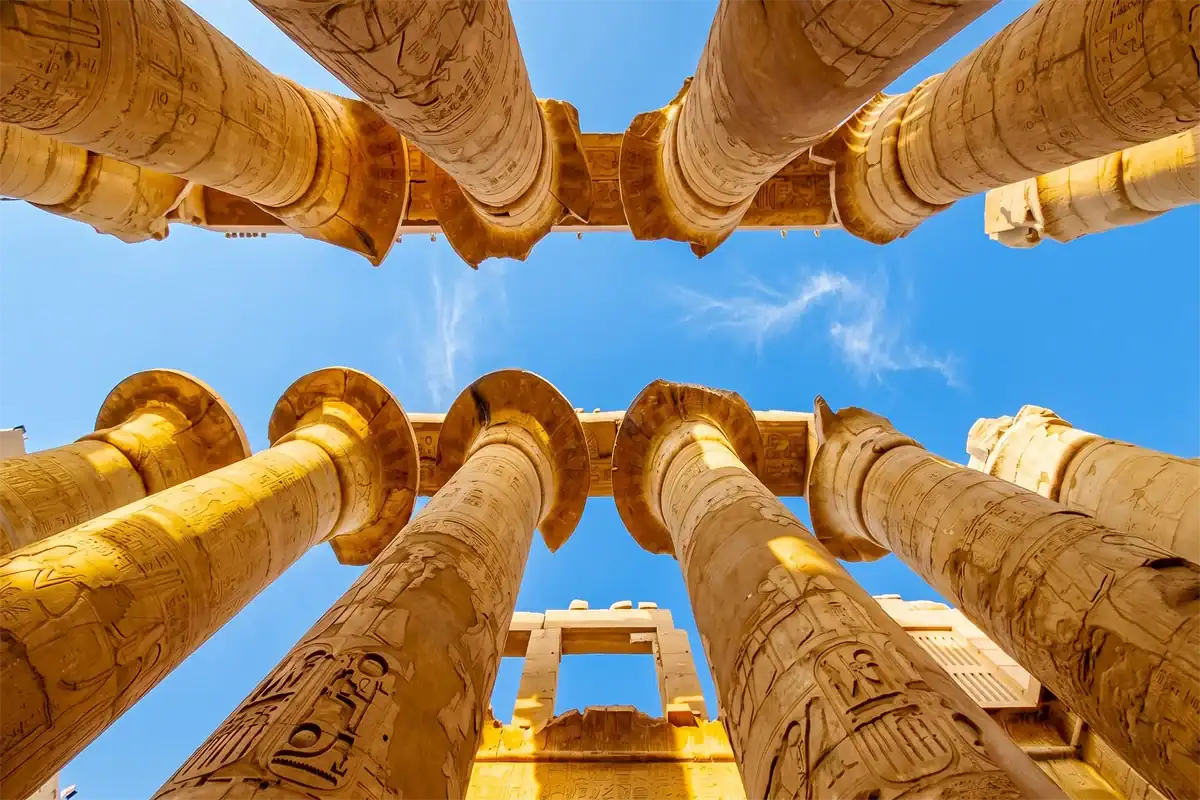
Five days can support Cairo and Luxor if domestic flights fit. Luxor gives you access to the Valley of the Kings and Karnak Temple without requiring a cruise. The 5-Day Cairo and Luxor Tour is a relevant starting point for this shorter travel window; check the daily schedule against your arrival time.
Seven days: enough for the classic route, not every extra
A workable seven-day structure is two Cairo nights, three cruise nights, and one final Cairo night. That uses all six overnight stays. There isn’t an unallocated night for a beach resort or an extended detour.
This option suits travelers comfortable with early starts and limited downtime. If flight times force sightseeing immediately after a very early departure, consider adding a night rather than assuming you’ll simply manage the fatigue.
Eight to 10 days: use the extra time deliberately
Eight days gives you one additional night beyond that compact framework. Put it where it solves a problem: arrival recovery, an extra Luxor stay, or more time in Aswan before embarkation.
Ten days allows a fuller Cairo visit and potentially an excursion to the Abu Simbel Temples or Alexandria. It won’t automatically feel slower if you fill both extra days with long outings. Protect some unscheduled time if comfort is the reason you’re extending.
Twelve to 14 days: depth or a different kind of break
Two weeks lets you combine archaeological sightseeing with several quieter days, including a possible Red Sea stay. Choose your beach destination with onward transport in mind; adding a resort isn’t useful if the transfer consumes most of your available rest time.
A two-country vacation is also possible, but 14 days split between countries is not equivalent to 14 days exploring Egypt.
How should an eight-day Egypt itinerary fit together?

Here is an illustrative eight-day, seven-night route, not a promised schedule for a particular package. It assumes a suitable three-night Aswan-to-Luxor sailing and an international departure from Cairo.
- Day 1 — Arrive in Cairo: Transfer to your hotel and rest. Avoid prepaid sightseeing that depends on an on-time international arrival.
- Day 2 — Giza: Visit the pyramids and Great Sphinx. Add another visit only if opening hours, traffic, and your energy allow.
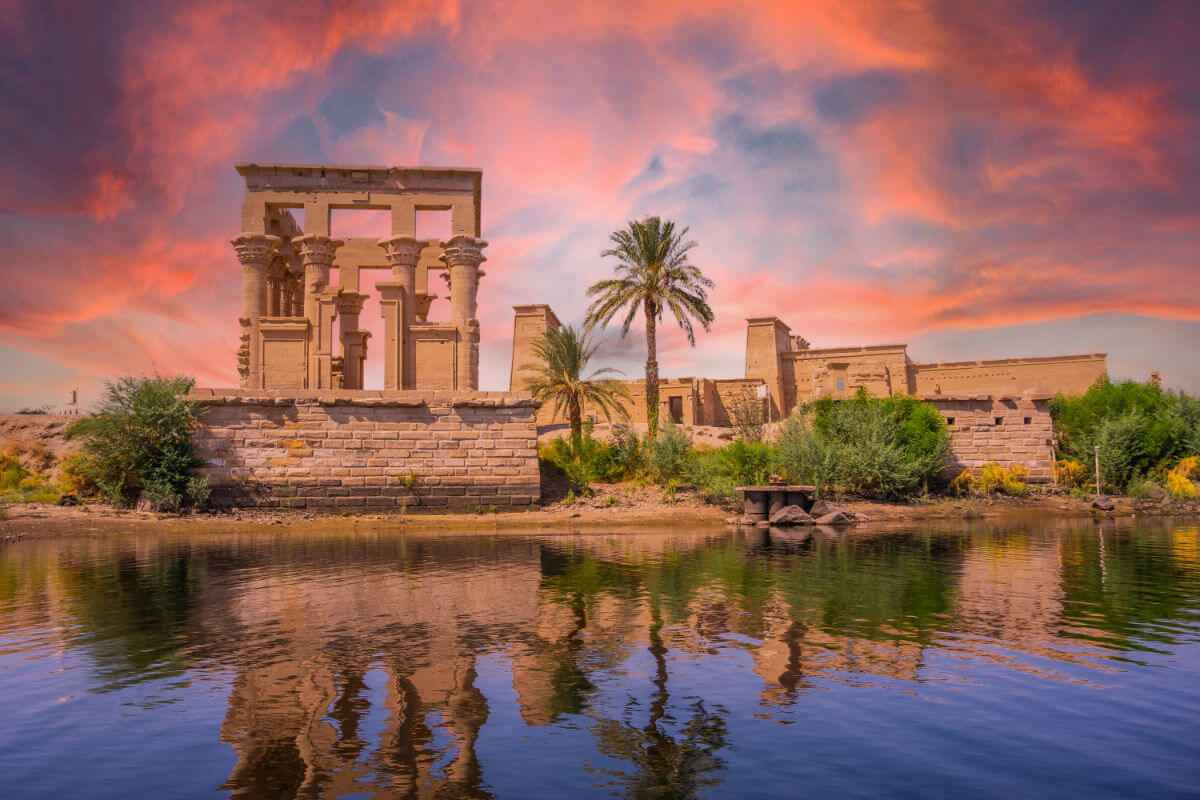
- Day 3 — Fly to Aswan and embark: Transfer to the cruise and visit Philae Temple if the confirmed program permits. First cruise night.
- Day 4 — Cruise sightseeing: Follow the vessel’s program, typically including Kom Ombo. Second cruise night.
- Day 5 — Continue toward Luxor: Temple visits and sailing follow the ship’s timetable, potentially including Edfu. Third cruise night.
- Day 6 — Disembark in Luxor: Visit the scheduled East or West Bank sites, then stay overnight in Luxor. Avoid duplicating sightseeing already included with the cruise.
- Day 7 — Return to Cairo: Fly back with room for an optional museum visit if the flight schedule allows. Stay overnight in Cairo.
- Day 8 — Depart: Allow an appropriate airport transfer and check-in margin.
This version uses the extra night in Luxor. If Cairo’s museums matter more, move that night to Cairo instead. If Abu Simbel is essential, an additional Aswan night before embarkation may be the better choice.
For more route-planning detail, see the eight-day Egypt itinerary guide. The key is matching overnight stays to actual transfer and sightseeing needs, not simply adding another city.
Which logistics can change how many days you need?
Cruise direction and departure day
Many standard cruises follow three-night Aswan-to-Luxor or four-night Luxor-to-Aswan patterns, although vessels and programs vary. Confirm the actual embarkation day before buying flights. “Four days” on a cruise generally does not mean four nights onboard.
A cruise also isn’t continuous sailing. Ships spend time docked for excursions, and sightseeing may begin early. Ask which visits occur before embarkation or after disembarkation and whether those transfers are included.
Domestic flights and your final connection
Cairo International Airport (CAI), Luxor International Airport (LXR), and Aswan International Airport (ASW) are the main airports for this route. The flight itself is only part of the journey: hotel pickup, check-in, security, baggage collection, and the arrival transfer can consume a substantial sightseeing block.
Returning to Cairo the night before an international departure reduces exposure to a same-day domestic delay. It does not guarantee a connection. Ask whether tickets are separate and what assistance applies if schedules change.
Long excursions need room around them
Abu Simbel by road requires several hours each way from Aswan and often an early departure. Don’t assume it can be inserted before cruise embarkation without checking the return time and sailing schedule.
Alexandria from Cairo is also a substantial travel day. An overnight can be preferable if you dislike long return drives, but it adds a hotel change. On a short trip, compare that trade-off with another full day in Cairo.
Planning tip: Ask for a night-by-night summary showing the city or vessel, flight segments, and transfer days. It often reveals a rushed itinerary faster than a long list of included attractions.
How do season and travel style affect the right duration?
October through April generally offers more comfortable sightseeing temperatures than summer, particularly in Luxor and Aswan. Holiday periods can bring stronger demand, while winter mornings and evenings may require a light layer.
During hotter months, allow early outdoor visits and meaningful midday breaks. An extra day helps only if it spreads the sightseeing out; it offers little relief if you add more exposed temple visits.
Families, travelers with limited walking stamina, and anyone who dislikes consecutive early starts should consider nine or 10 days with fewer daily stops. Discuss uneven surfaces, stairs, boarding arrangements, and walking distances before booking rather than relying on a “relaxed” label.
Private guiding can offer more control over some sightseeing decisions, but it does not override museum hours, flight schedules, or a shared cruise timetable. Our private versus group Egypt tour comparison explains which differences matter when choosing the pace.
What does a longer Egypt trip cost?
Length alone is a poor price comparison. Hotel and cruise categories, travel dates, room occupancy, flights, and included excursions can outweigh the cost of an extra night.
As starting-price references, the 8-Day Private Egypt Tour with Nile Cruise is listed from USD 1,940, while the 10-Day Egypt Tour: Cairo, Nile Cruise & Ancient Wonders is listed from USD 2,490. These are different packages, not a fixed price for adding two days. Starting prices may change; request a quote for your dates and party.
Before comparing totals, verify:
- Whether international and domestic flights are included, plus applicable baggage allowances.
- The number of hotel and cruise nights and the proposed properties or vessel.
- Meals, airport transfers, guiding arrangements, and standard entrance tickets.
- Optional costs such as Abu Simbel, special tombs, pyramid interiors, and gratuities.
- Any single-occupancy supplement or additional nights required by your flights.
The Cairo and Nile cruise cost guide provides a useful framework for comparing inclusions rather than headline prices.
Which trip length should you book?
- Choose five days if Egypt is a short extension and Cairo plus Luxor satisfies your priorities. Verify that flight times leave enough usable sightseeing time.
- Choose seven days if a Nile cruise is essential and vacation time is fixed. Confirm sailing dates first and be prepared to leave optional excursions out.
- Choose eight days if you want the classic route with one carefully placed extra overnight. Decide whether Cairo, Aswan, or Luxor benefits most.
- Choose 10 days if museums, Abu Simbel, or recovery time matter. Check that the extra days improve the pace rather than simply expand the checklist.
- Choose 12–14 days for more depth or beach time. If considering Egypt and Jordan together, check how many days each country actually receives.
The verified options below span Egypt-focused and longer multi-country itineraries. Compare their day-by-day programs against your must-see list, not just their total duration.
One Nation Travel is a TÜRSAB Class A travel agency (A-6073) handling planning, booking, customer support, and coordination. Experienced local guides, drivers, and selected local providers deliver the listed services; assignments may vary by destination, day, or tour segment. Before booking, confirm what is private, what is shared, and how support works during transfers.
Choose your next step
Recommended Egypt tours
These verified options are the closest available matches for this article’s destination, route intent, and trip length.

14-Day Egypt & Jordan Grand Tour
A 14 days route covering Egypt, Jordan.
View tour details →
10-Day Egypt Tour: Cairo, Nile Cruise & Ancient Wonders
A 10 days Historical & Cultural Tour route covering Egypt.
View tour details →
8-Day Private Egypt Tour with Nile Cruise
A 8 days Cultural & Heritage Tour route covering Egypt.
View tour details →
17-Day Türkiye, Egypt & Jordan Highlights Tour
A 17 days Cultural & Heritage Tour route covering Turkey, Egypt and 1 more destination.
View tour details →Frequently Asked Questions
Do I need a Nile cruise to see Luxor and Aswan?
No. You can use hotels and arrange transport and sightseeing separately. This can suit travelers who prefer more control over daily timing. A cruise offers the convenience of keeping the same cabin between destinations, but follows a fixed program.
Should I plan for the Egyptian Museum or the Grand Egyptian Museum?
They are different museums. Confirm the exact museum named in your itinerary and allow dedicated time for the collection you most want to see. Don’t assume a package’s “museum visit” includes both, or that either fits comfortably into an already full Giza day.
Does an eight-day Egypt tour require more than eight vacation days?
Possibly. Tour days usually describe the destination itinerary, while your international journey may begin the previous day or require additional travel time home. Check local arrival and departure dates before requesting time off or booking flights.
The best choice for most first-time visitors
Start with eight to 10 days, then adjust around your flights, cruise schedule, and preferred pace. Seven days can work well when the connections align; five days is better treated as a focused visit.
Share your dates, arrival airport, must-see places, and comfort priorities through Plan My Trip. One Nation Travel can help you choose a workable duration and clarify the arrangements before you commit.