
Short answer: Istanbul’s five essential sights are Hagia Sophia, the Blue Mosque, Topkapi Palace, the Grand Bazaar, and a Bosphorus cruise — all reachable on foot or by tram from Sultanahmet. Plan 3 to 4 full days, visit in April–May or September–October for the best weather, get an Istanbulkart for transit, and budget for paid entry at Hagia Sophia and Topkapi.
Istanbul rewards travelers who plan a little and wander a lot. The city straddles two continents, holds nearly 3,000 years of layered history, and still manages to feel like a place where people actually live — ferries crossing at rush hour, fishermen on Galata Bridge, tea glasses clinking in back-alley cafés. Our team at One Nation Travel builds hundreds of Istanbul itineraries every year, and the same questions come up again and again: what’s actually worth paid entry, how do you avoid the worst lines, and how many days do you really need?
This guide answers those questions with the specifics we give our own clients — timing, costs, route logic, and the small decisions that separate a smooth trip from a frustrating one.
What Are the Must-See Sights in Istanbul?
1. Hagia Sophia
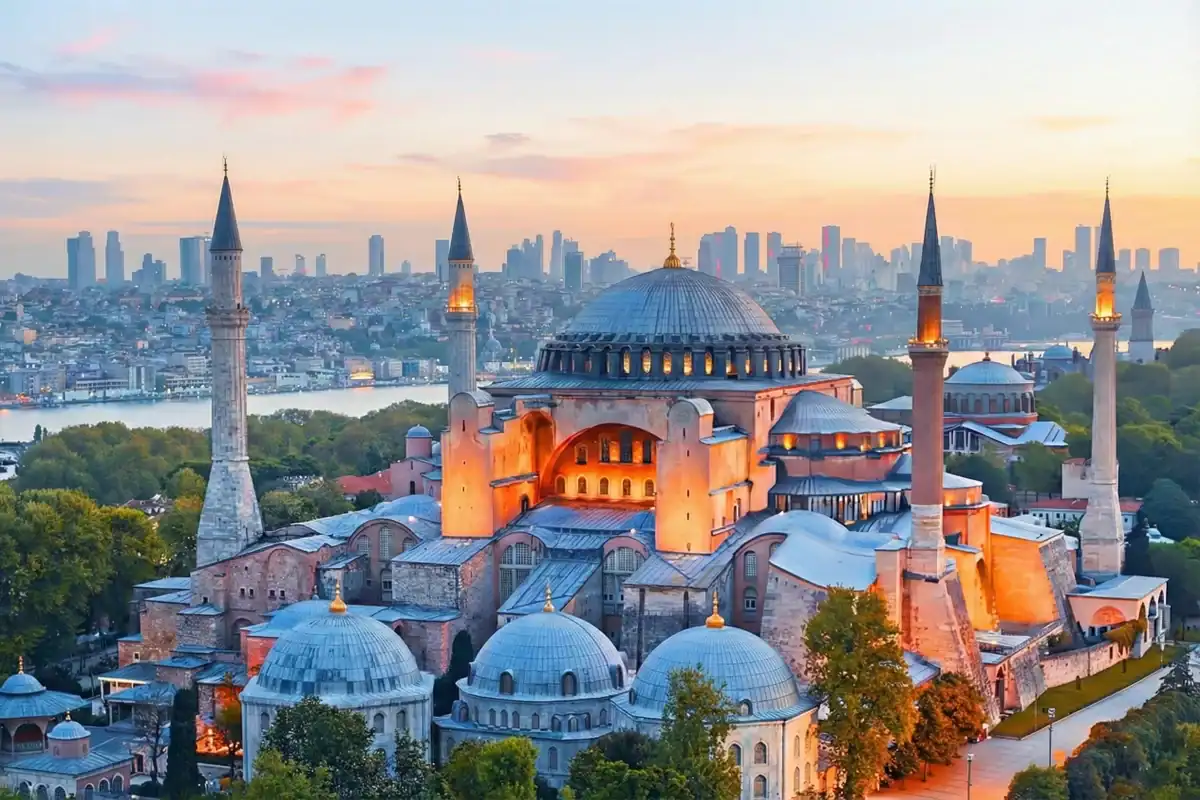
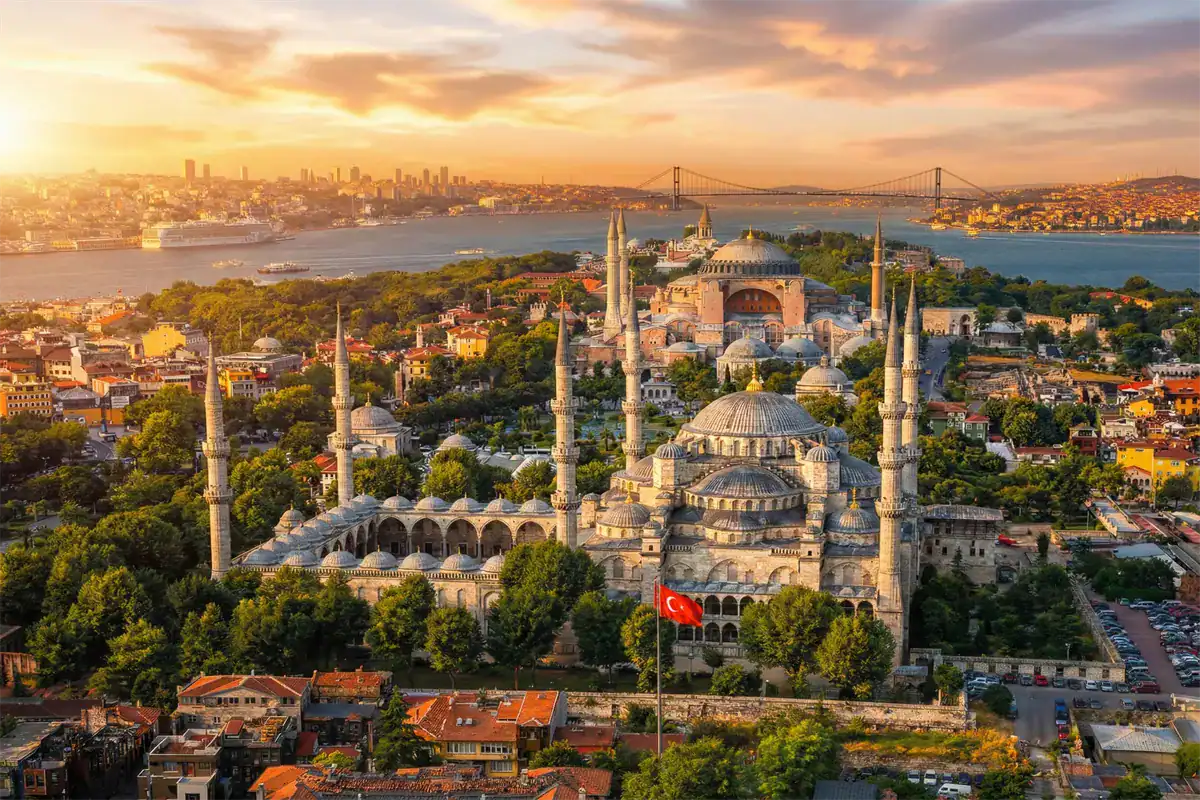
Built in 537 AD as the largest cathedral in the world, Hagia Sophia served as a church for over 900 years, a mosque for nearly 500, briefly a museum, and since 2020 has functioned as a working mosque again. That change matters for your visit: foreign tourists now enter through a dedicated gate and pay an entrance fee to access the upper gallery, where the famous Byzantine mosaics are. The ground floor is reserved for worshippers.
Go early — the tourist entrance opens in the morning and lines build fast by 10 a.m., especially April through October. The building closes to visitors during the five daily prayer times, so check the schedule the day you go. Guided visits are worth it here more than almost anywhere else in the city; the layers of Byzantine and Ottoman history aren’t obvious without context. If you’re deciding between the city’s two most famous buildings, our comparison of Hagia Sophia vs. the Blue Mosque breaks down what each one actually offers.
2. The Blue Mosque (Sultan Ahmed Mosque)
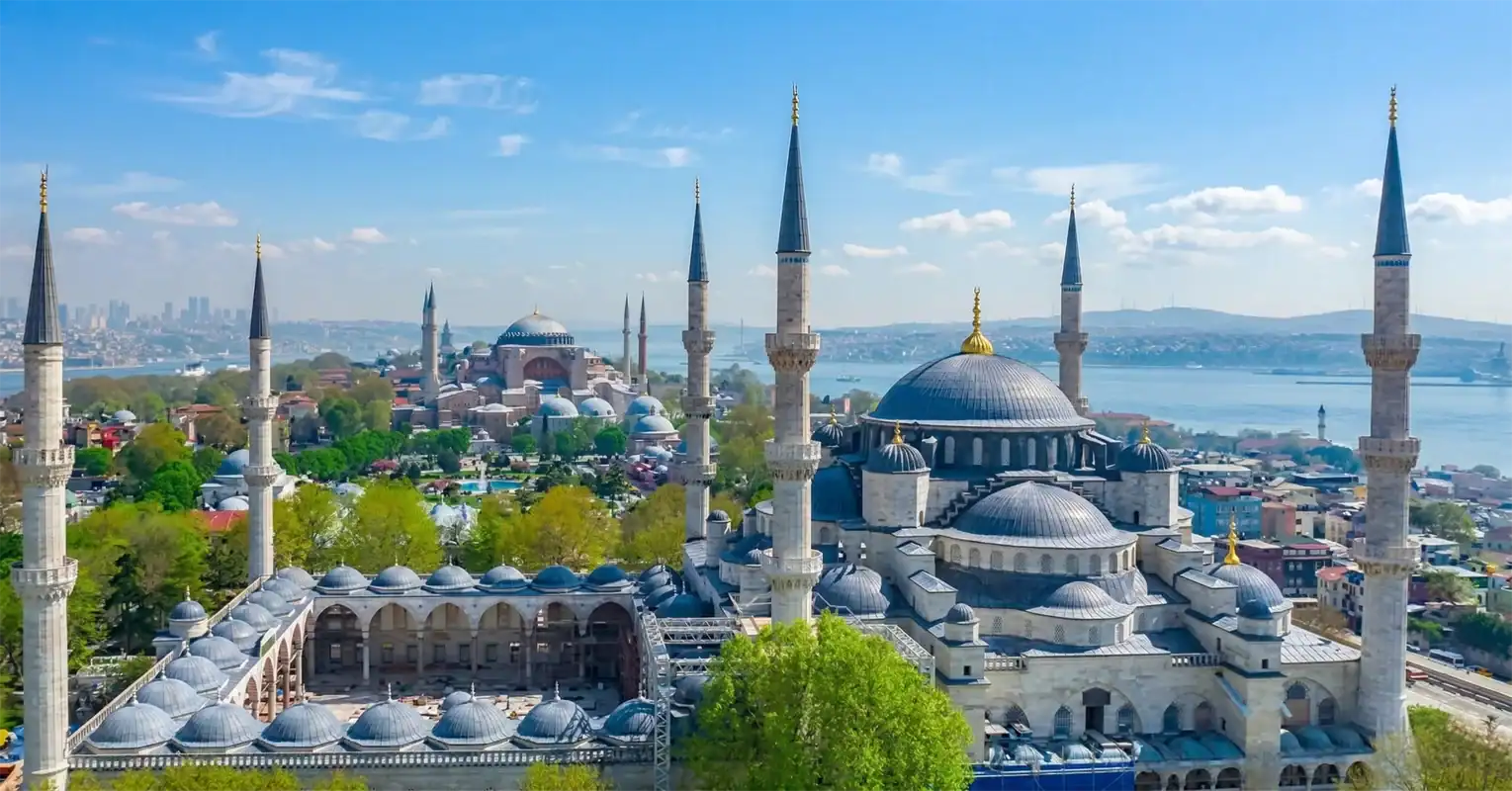
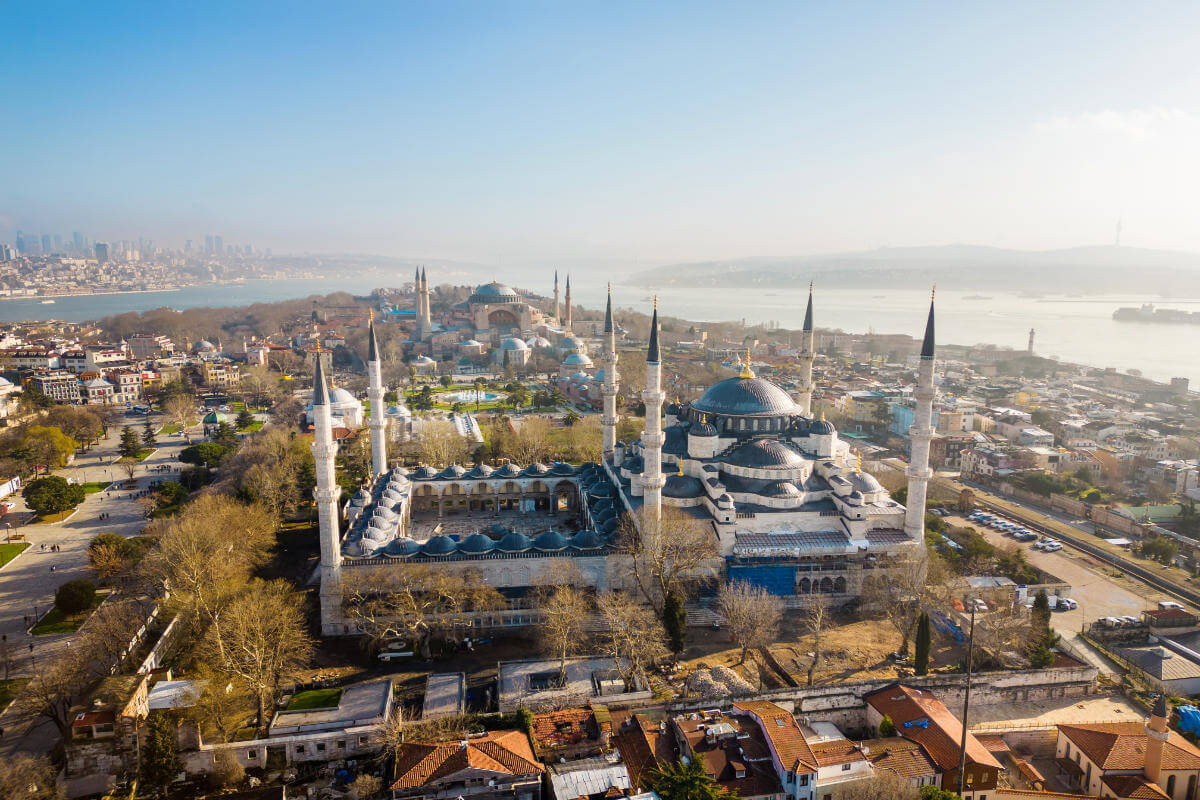
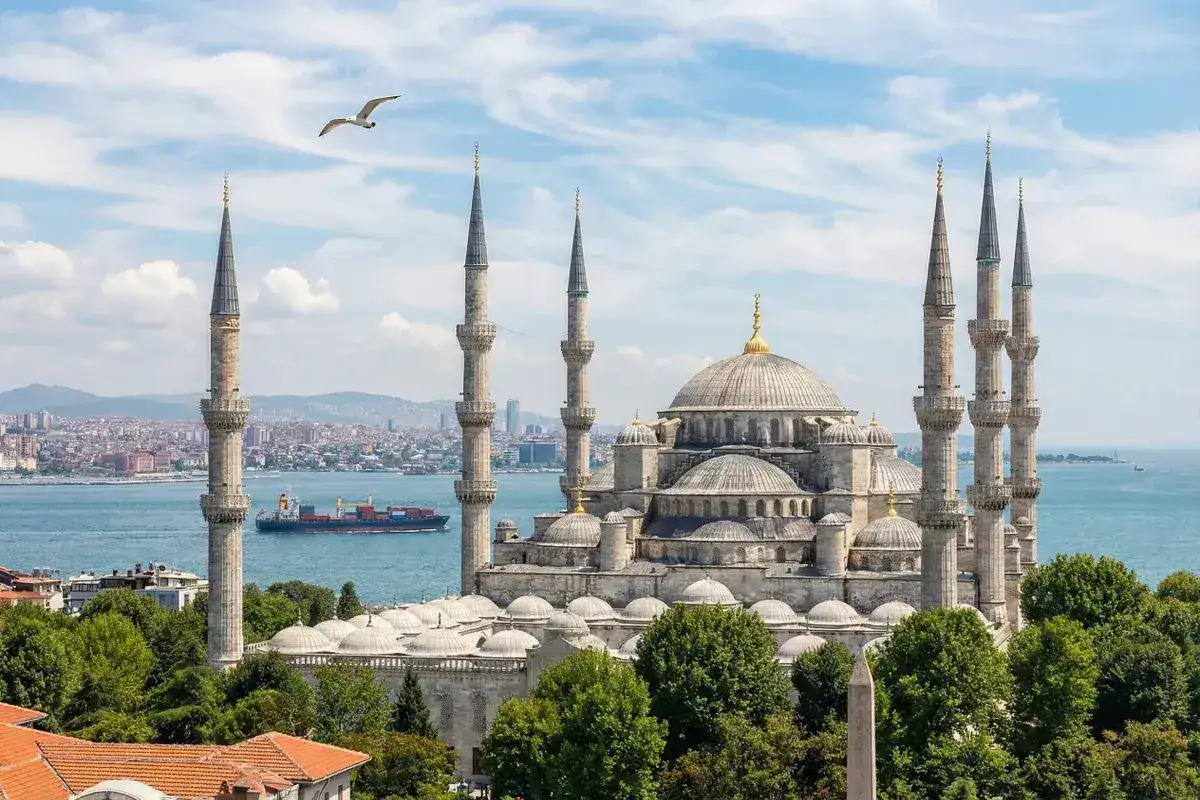
Directly across the park from Hagia Sophia, the Blue Mosque is free to enter and famous for its six minarets and roughly 20,000 handmade İznik tiles in blues and greens. It’s an active mosque, so it closes to visitors during prayer times — Friday midday is the longest closure. Dress modestly (shoulders and knees covered; women cover their heads), remove your shoes at the entrance, and keep your voice down. Free wraps are available at the door, but bringing your own scarf is faster.
3. Topkapi Palace
For nearly 400 years, Topkapi Palace was the administrative heart of the Ottoman Empire. Give it at least 2.5 to 3 hours — most visitors underestimate it. The Treasury holds the 86-carat Spoonmaker’s Diamond and the emerald-hilted Topkapi Dagger; the Harem is a separate ticket and genuinely worth the add-on for its tilework and the story of court life it tells. The palace is closed Tuesdays, which trips up more itineraries than any other closure in the city. The fourth courtyard has terrace views over the Bosphorus that alone justify the entry price.
4. The Grand Bazaar
The Grand Bazaar dates to 1461 and covers 61 covered streets with roughly 4,000 shops. It’s closed Sundays — the second most common itinerary mistake we see. Haggling is expected; a realistic outcome is 25–40% off the first quoted price on carpets, leather, and jewelry. For food shopping — Turkish delight, spices, dried fruit, tea — skip the Grand Bazaar’s tourist markups and walk 10 minutes downhill to the Spice Bazaar near Eminönü, where prices run noticeably lower and locals still shop.
5. A Bosphorus Cruise
No visit is complete without seeing the city from the water. A Bosphorus cruise takes you along the strait that divides Europe and Asia, past Ottoman waterfront mansions, Rumeli Fortress, and the Maiden’s Tower. You have three options: a budget public ferry from Eminönü (the cheapest scenic ride in Europe, honestly), a 90-minute tourist short cruise, or a sunset/dinner cruise. The 90-minute short cruise is the sweet spot for most travelers — the full-length cruise to the Black Sea mouth eats most of a day.
What Should You See Beyond the Big Five?
Süleymaniye Mosque
Many travelers tell us afterward that Süleymaniye Mosque was their favorite building in Istanbul. Built by the master architect Sinan in 1557, it’s larger and calmer than the Blue Mosque, free to enter, and its garden terrace has one of the best views over the Golden Horn in the city.
Galata Tower and Karaköy
Cross Galata Bridge to the newer side of the old city. Galata Tower, built in 1348, offers a 360-degree panorama — but the line at sunset can run 45 minutes or more, so go at opening or book a timed slot. The surrounding Karaköy neighborhood has become the city’s best area for third-wave coffee, small galleries, and breakfast spots. From there, walk up to Istiklal Avenue for the historic red tram, arcades, and street food.
Chora Church (Kariye Mosque)
If Byzantine mosaics are your thing, the Chora Museum in the Edirnekapı district holds some of the finest surviving 14th-century mosaics and frescoes anywhere. It’s a 20-minute taxi from Sultanahmet and rarely crowded — a genuine reward for the detour.
Ortaköy and the Asian Side
Ortaköy sits under the Bosphorus Bridge with a photogenic waterside mosque and the famous kumpir (loaded baked potato) stands. For a half day with almost no tourists, take a ferry from Eminönü to Kadıköy on the Asian side — the ride itself is part of the experience, and the food market there is where Istanbul residents actually eat. If you want an hour-by-hour version of this routing, our 4-day Istanbul route guide lays it out with ferry times.
How Many Days Do You Need in Istanbul?
Here’s the honest breakdown we give clients:
- 2 days: The Sultanahmet core (Hagia Sophia, Blue Mosque, Topkapi, Grand Bazaar) plus a short Bosphorus cruise. Doable but rushed.
- 3–4 days: The sweet spot. Everything above plus Galata, Süleymaniye, the Spice Bazaar, and a relaxed evening in Karaköy or Ortaköy.
- 5+ days: Add the Asian side, Chora, the Princes’ Islands, or a day trip. From Istanbul you can reach Gallipoli on a long day trip — see our guide to getting from Istanbul to Gallipoli — or fly to Cappadocia in about 80 minutes.
In our bookings, the most common regret isn’t spending too long in Istanbul — it’s cramming it into 48 hours at the start of a longer Turkey trip and arriving in Cappadocia already exhausted.
When Is the Best Time to Visit Istanbul?
April–May and September–October are the best windows: temperatures in the 60s–70s °F, long daylight, and manageable crowds. April brings the Tulip Festival, when millions of tulips bloom in the city’s parks. July and August are hot (85–95°F), humid, and packed at every major site — if summer is your only option, do outdoor sights before 10 a.m. and save museums for the afternoon heat. November through March is low season: gray and rainy, but hotel rates drop 30–40% and you’ll have Hagia Sophia’s gallery nearly to yourself on a weekday morning. There’s a reason locals prefer October, which we explain in why you shouldn’t visit Turkey in summer.
Practical Tips for Visiting Istanbul
Getting Around
- Get an Istanbulkart from any metro or tram station kiosk. It works on trams, metros, buses, funiculars, and ferries, and each ride costs a fraction of a taxi. One card can be tapped for multiple people.
- The T1 tram is your workhorse: it connects Sultanahmet, the Grand Bazaar (Beyazıt stop), Eminönü ferries, and Karaköy in one line.
- Airports: Istanbul Airport (IST) on the European side is 45–75 minutes from Sultanahmet depending on traffic; Sabiha Gökçen (SAW) on the Asian side is 60–90 minutes. Budget real time for this — missed domestic flights to Cappadocia because of underestimated transfers are the most common logistics problem we fix.
- Taxis: Insist on the meter or use the BiTaksi app. Airport transfers arranged in advance remove the negotiation entirely.
Money and Costs
- Turkey’s currency is the lira, and inflation means posted prices change often — treat any exact figure you read online as a snapshot, not a promise. Major sites like Hagia Sophia and Topkapi price tickets for foreign visitors in USD.
- Credit cards are accepted almost everywhere, but carry cash for street food, small bazaar stalls, and tips.
- A realistic mid-range daily budget — food, transit, one paid attraction — is quite reasonable by Western standards. Our Istanbul daily budget breakdown has current line-item costs.
Etiquette and Safety
- At mosques: shoulders and knees covered for everyone, headscarves for women, shoes off. Avoid visiting during prayer times.
- Istanbul is broadly safe for tourists, including solo travelers. The main risks are pickpockets in crowded areas (Grand Bazaar, Istiklal, packed trams) and the classic “friendly stranger invites you for a drink” bar scam aimed at solo men. Politely decline and move on.
- Tap water is technically treated but most locals drink bottled water — follow their lead.
Operator tip: Book Hagia Sophia and Topkapi for different days rather than back-to-back. Both involve significant standing and queuing, and pairing each with a lighter afternoon — a cruise, the Spice Bazaar, a neighborhood walk — keeps the trip enjoyable instead of endurance-based.
What to Eat
Don’t leave without trying a full Turkish breakfast, balık ekmek (grilled fish sandwich) at Eminönü, simit from a street cart, fresh baklava, and Turkish tea or coffee. Adventurous eaters should hunt down kokoreç or midye dolma (stuffed mussels) late at night on Istiklal. For the full list with where to find each dish, see our Turkish food guide.
Recommended Tours and Trip Extensions from Istanbul
Most travelers we work with don’t stop at Istanbul — the city pairs naturally with the rest of Turkey, and flight connections make extensions easy:
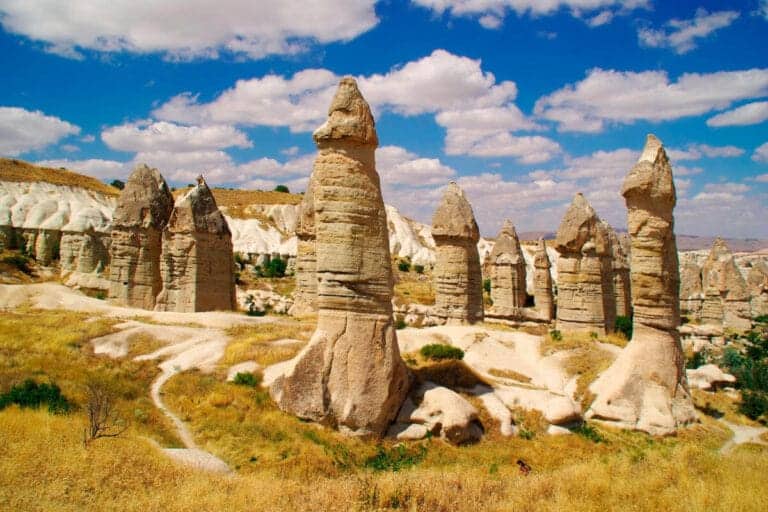
- Cappadocia: An 80-minute flight puts you among fairy chimneys and hot-air balloons. A 2-day extension is the minimum that makes sense; see our guide to the best Cappadocia tours from Istanbul.
- Ephesus and Pamukkale: Fly to Izmir or Denizli for the Roman ruins of Ephesus and the white terraces of Pamukkale — the classic add-ons on a 7-day route like our 7-day Turkey itinerary.
- Full Turkey circuits: Browse complete packages with domestic flights, hotels, and guides included on our Turkey tours page, or see options built specifically for American travelers under Turkey tours from the USA.
- Multi-country trips: Istanbul is the natural starting point for combined Turkey, Egypt, and Jordan tours thanks to direct regional flights.
Not sure whether to go guided or independent in the city itself? Our comparison of private vs. group tours in Istanbul covers when each option actually earns its price.
Frequently Asked Questions
Is Istanbul safe for tourists?
Yes. Istanbul is a major international city with millions of visitors annually, and violent crime against tourists is rare. Standard precautions apply: watch belongings in crowds, use licensed taxis or apps, and be skeptical of overly friendly strangers steering you toward specific bars or shops.
Do I need to cover my head to enter mosques?
Women need to cover their heads inside mosques; both men and women should cover shoulders and knees. Major mosques lend wraps at the entrance, but a lightweight scarf in your bag is quicker. Everyone removes shoes before entering.
Is Hagia Sophia free to enter?
No — since 2024, foreign visitors pay an entrance fee to access the upper gallery through a dedicated tourist entrance. The ground floor is reserved for prayer. The Blue Mosque and Süleymaniye Mosque remain free.
How do I get from Istanbul Airport to Sultanahmet?
Options include the airport metro line with a transfer, the Havaist airport bus, taxi, or a prearranged private transfer. Allow 45–75 minutes by road depending on traffic — Istanbul congestion is real, especially weekday evenings.
Are credit cards widely accepted?
Yes, including contactless payment in most restaurants and shops. Keep some lira in cash for street vendors, small bazaar purchases, public restrooms, and tips.
Ready to Plan Your Istanbul Trip?
Istanbul is one of the few cities that genuinely delivers on its reputation — the skyline from the ferry, the echo inside Hagia Sophia, the first bite of proper baklava. The difference between a good trip and a great one usually comes down to routing: the right neighborhoods on the right days, closures accounted for, and enough breathing room to actually enjoy it. That’s the part we handle every day. Tell us your dates and interests on our Plan My Trip page, and our team will build an Istanbul itinerary — or a full Turkey route — around exactly how you like to travel.