
Short answer: The top 10 things to do in Turkey are exploring Istanbul’s Sultanahmet monuments, hot air ballooning over Cappadocia, walking the marble streets of Ephesus, bathing at Pamukkale’s travertines, combining beaches and Roman ruins in Antalya, watching sunrise on Mount Nemrut, paying respects at Gallipoli, visiting Troy, eating your way through Turkish cuisine, and descending into Cappadocia’s underground cities.
Turkey rewards travelers who plan around geography, not just bucket lists. The country is roughly the size of Texas, and its headline sights sit hundreds of miles apart — Istanbul in the northwest, Cappadocia in central Anatolia, Ephesus and Pamukkale near the Aegean, Antalya on the Mediterranean. The good news: domestic flights are cheap (often $40–80 one way) and frequent, so a smart route covers most of this list in 7–10 days.
Below is the list our team builds most Turkey tour itineraries around, with the timing, costs, and logistics that actually matter once you’re on the ground.
What Are the Top 10 Things to Do in Turkey?

1. Explore Istanbul’s Imperial Landmarks
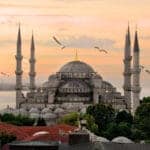
Start in Sultanahmet, where 1,500 years of empire sit within a 15-minute walk. Hagia Sophia now operates as a working mosque with a paid tourist entrance (around $25 for the upper gallery); go at opening or after 4 p.m. to dodge tour-bus waves. Across the square, the Blue Mosque is free but closes to visitors during the five daily prayers. Budget a half day for Topkapi Palace — the Harem section requires a separate ticket and is worth it.
Then leave the old city. Haggle in the Grand Bazaar (closed Sundays), buy spices and Turkish delight at the Spice Bazaar, and take a Bosphorus cruise — the public ferry version costs a few USD and delivers the same skyline as private boats charging ten times more. Plan a minimum of three full days here.
2. Ride a Hot Air Balloon Over Cappadocia
Cappadocia is the single most requested destination in our bookings, and the balloon flight is the reason. Flights launch at sunrise (roughly 5:00–6:30 a.m. depending on season), last about an hour, and cost $200–360 per person depending on basket size and operator quality. Two caveats travelers underestimate: flights are canceled by wind roughly 60–90 days a year, mostly in winter and early spring, so book the balloon for your first morning to leave a backup day. And cheaper isn’t better here — see our breakdown of the cheapest balloon rides in Cappadocia before choosing on price alone.
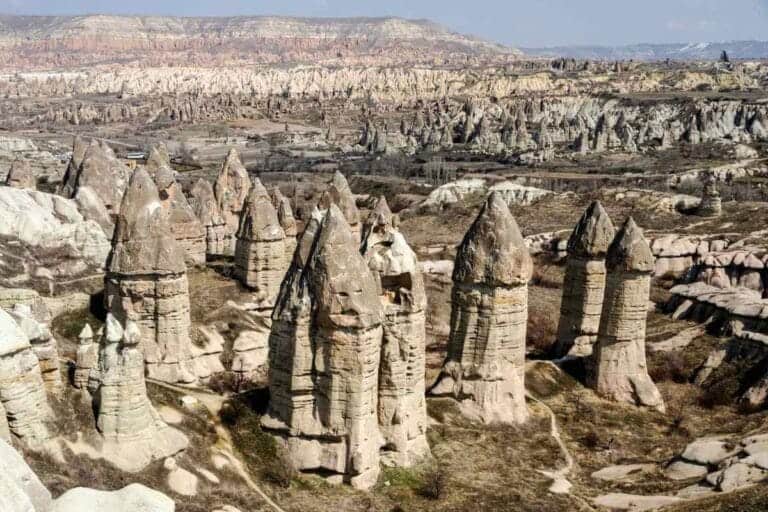
On the ground, Göreme National Park and its open-air museum of frescoed cave churches anchor a classic full-day tour, along with the mushroom-shaped pillars of Pasabag (Monks Valley). Sleep in a cave hotel — it’s the second thing guests rave about after the balloon.
3. Walk the Streets of Ancient Ephesus
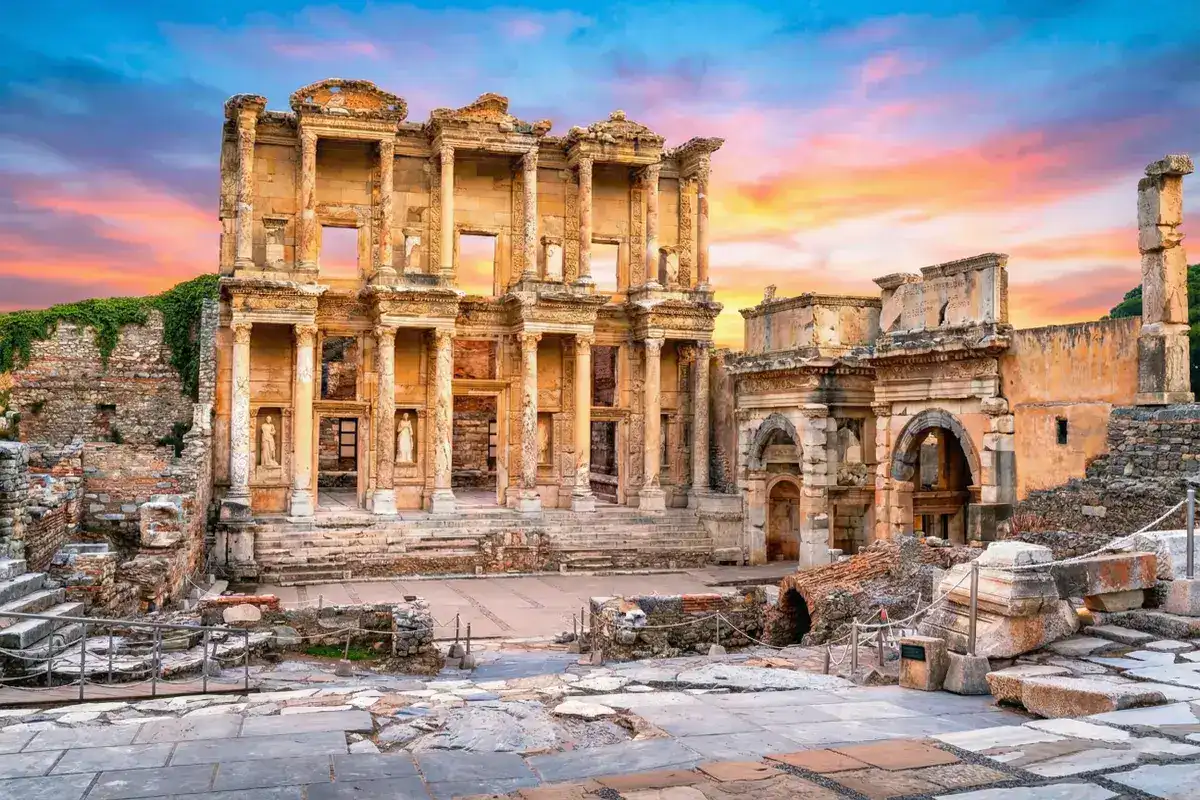
Ephesus, near Selçuk on the Aegean coast, is the best-preserved Roman city in the eastern Mediterranean. The Library of Celsus facade and the 24,000-seat Great Theatre are the postcard shots, but pay the supplement for the Terrace Houses — Roman villas with intact mosaics and wall paintings that most rushed groups skip. Arrive at 8 a.m. opening or after 3 p.m.; midday in summer means 95°F heat on white marble with zero shade.
Nearby, the House of the Virgin Mary draws Christian pilgrims, and a single column marks the Temple of Artemis, once a Wonder of the Ancient World.
4. Bathe at Pamukkale’s White Travertines
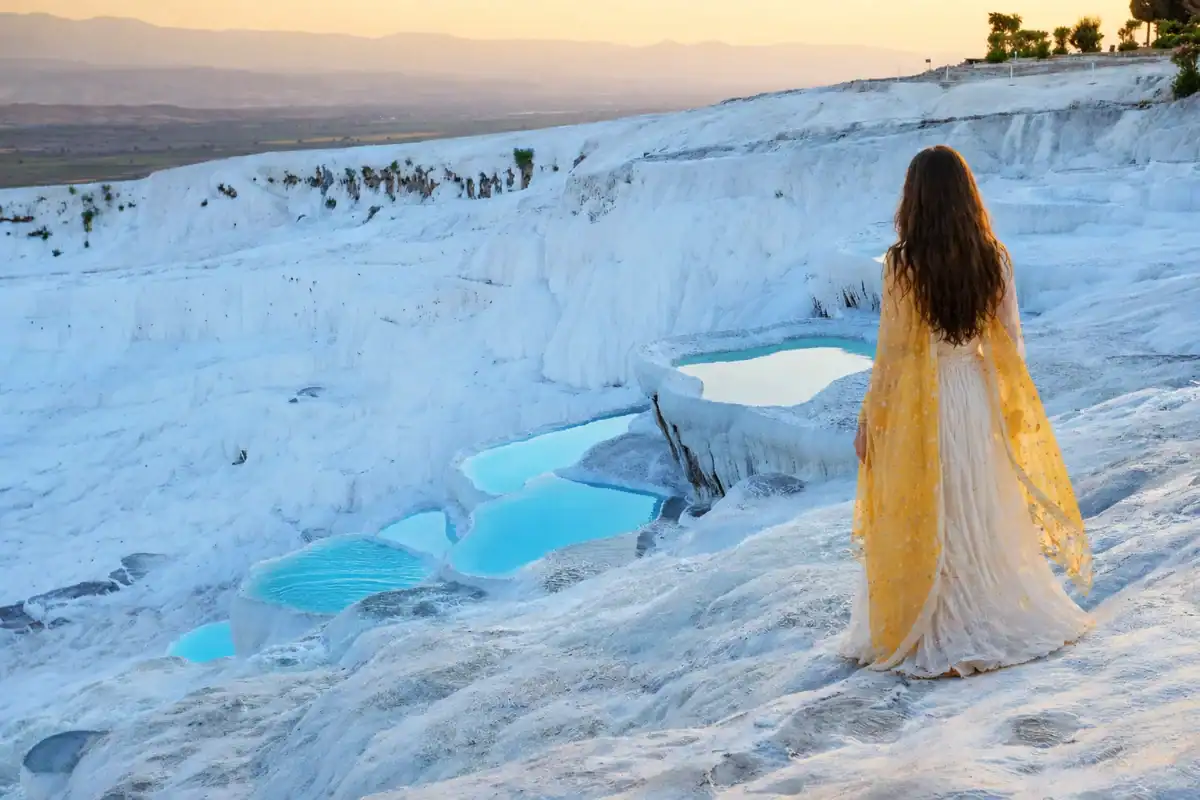
The travertines of Pamukkale — calcium terraces built up by thermal springs over millennia — look unreal even after you’ve seen a hundred photos. You walk the terraces barefoot (shoes are prohibited on the calcium), so bring a bag for your footwear. At the top sits Hierapolis, a Roman spa city with a restored theater and a vast necropolis. The Cleopatra Antique Pool charges a separate swimming fee and lets you float over submerged Roman columns in 36°C water.
Most travelers visit between Ephesus and Cappadocia — the drive from Selçuk is about 3 hours. Aim to be on the terraces before 10 a.m. or after 4 p.m. for soft light and thinner crowds. Honest assessment of whether it earns the detour: is Pamukkale worth visiting?
5. Mix Roman Ruins and Mediterranean Beaches in Antalya
Antalya is where you slow down. Wander Kaleiçi, the walled old town of Ottoman houses and Hadrian’s Gate, then spend an hour or two in the Antalya Museum — one of Turkey’s finest archaeological collections, with statuary excavated at nearby Perge. Day-trip options are excellent: the Aspendos Theater is arguably the best-preserved Roman theater anywhere, and Side puts a Temple of Apollo right on the waterfront. Swimming season runs reliably from May through late October.
6. Watch Sunrise on Mount Nemrut
In southeastern Turkey, Mount Nemrut holds the 2,000-year-old tomb sanctuary of King Antiochus I of Commagene, crowned with colossal toppled stone heads of gods and kings at 2,134 meters. It’s a UNESCO site and genuinely otherworldly at sunrise or sunset. Logistics are the catch: it’s a flight to Adıyaman or Malatya plus a mountain drive, and the summit road is typically open only from roughly May through October due to snow. This one suits travelers with 12+ days or a second trip to Turkey.
7. Pay Your Respects at Gallipoli
The Gallipoli Peninsula was the site of the 1915 WWI campaign that shaped the national identities of Turkey, Australia, and New Zealand. ANZAC Cove, the Lone Pine Memorial, and Chunuk Bair are moving regardless of where you’re from — Turkish and Allied cemeteries sit side by side. It’s about 4.5–5 hours by road from Istanbul, so most visitors combine it with Troy on a two-day loop rather than a punishing day trip. Full battlefield details are in our Gallipoli travel guide.
8. Stand Inside the Legend at Troy
Homer’s city is real. The Ancient City of Troy, near Çanakkale, reveals nine settlement layers spanning 4,000 years — you can see the famous angled walls of Troy VI, the layer many archaeologists link to the Trojan War era. The ruins themselves are modest compared to Ephesus, but the modern Troy Museum at the entrance is outstanding and provides the context the stones can’t. Pair it with Gallipoli; they’re 45 minutes apart across the Dardanelles.
9. Eat Your Way Through Turkish Cuisine
Turkish food deserves a spot on this list as an activity, not a footnote. Order a full Turkish breakfast (kahvaltı) at least once — cheeses, olives, honey with clotted cream, eggs, and endless tea, typically $8–15 per person. In Istanbul, eat balık ekmek (grilled fish sandwiches) by the Galata Bridge and meze with the locals in Karaköy. Cappadocia’s signature is testi kebab, slow-cooked in a sealed clay pot cracked open at your table. And if you’re anywhere near Gaziantep-style baklava, stop arguing and order it. Our guide to 25 must-try Turkish dishes covers what to order and roughly what it costs.
10. Descend Into Cappadocia’s Underground Cities
Cappadocia’s most surprising attraction is below ground. The underground cities of Kaymaklı and Derinkuyu drop up to eight levels into the soft volcanic rock — complete with stables, churches, ventilation shafts, and rolling stone doors that once sheltered thousands from invading armies. Derinkuyu reaches about 85 meters deep. Entry is included in most Cappadocia day tours; skip it only if you’re seriously claustrophobic, because some passages require walking bent over for 20–30 meters.

How Should You Route These 10 Experiences?
The route logic our team uses for most first-time visitors:
- 7 days: Istanbul (3 nights) → fly to Cappadocia (2 nights) → fly via Istanbul or drive to Pamukkale and Ephesus (2 nights). Covers items 1–4, 9, and 10.
- 9–10 days: Add Antalya for two nights of coast and Roman sites after Pamukkale.
- 12+ days: Add the Gallipoli–Troy loop from Istanbul at the start, or Mount Nemrut in the southeast.
One ordering tip that saves real frustration: consider flying to Cappadocia first and finishing in Istanbul rather than the reverse. Your balloon flight gets maximum backup mornings, and you end the trip near your international departure airport. We explain the reasoning in why your Turkey tour shouldn’t start in Istanbul.
Practical Tips for Visiting Turkey
- Best months: April–June and September–October offer 65–80°F days and manageable crowds. July–August is hot (95°F+ inland) and peak-priced; balloon cancellations spike December–March.
- Domestic flights: Turkish Airlines, Pegasus, and AJet connect Istanbul (IST and SAW) with Kayseri and Nevşehir (for Cappadocia), Izmir (for Ephesus), Denizli (for Pamukkale), and Antalya. Book 3+ weeks out for the best fares.
- Money: Turkey uses the lira, but hotels and tours are commonly quoted in USD or dollars. Carry some cash for bazaars, taxis, and tips.
- Entry fees: Major sites (Hagia Sophia, Topkapi, Ephesus, Hierapolis) now charge $25–40 for foreign visitors. Budget roughly $150–200 per person for admissions across a 9-day trip — a cost line that surprises many travelers.
- Dress: Mosques require covered shoulders and knees; women need a headscarf (loaner scarves available at major mosques).
- Trip length: If you’re deciding between 5, 7, or 10 days, our cost comparison on how many days you need in Turkey breaks down the real math.
Operator note: the most common mistake we see in real bookings is scheduling the Cappadocia balloon on the final morning. If wind cancels it, there’s no second chance. Always put the balloon on day one of your Cappadocia stay.
Recommended Turkey Tours That Cover This List
These itineraries bundle domestic flights, licensed guides, entrance logistics, and cave-hotel stays so the route above runs without you managing six separate bookings:
- 7-Day Istanbul, Pamukkale, Ephesus and Cappadocia Tour with Flights — from $1,418. The efficient first-timer route covering items 1–4, 9, and 10 with internal flights included.
- 9-Day Best of Turkey Tour: Istanbul, Cappadocia, Antalya, Pamukkale & Ephesus — from $1,670. Adds the Mediterranean coast for a culture-plus-beach balance.
- 12-Day Turkey Tour: Istanbul, Gallipoli, Troy, Pergamon, Ephesus, Pamukkale, Antalya & Cappadocia — from $1,680. Hits 9 of the 10 experiences on this list, including the Gallipoli–Troy loop.
- 18-Day Grand Turkey Tour: Land of Civilizations & Wonders — from $3,860. The deep-dive version for travelers who want the east, including Mount Nemrut territory, without rushing.
Frequently Asked Questions
What is the number one thing to do in Turkey?
A sunrise hot air balloon flight over Cappadocia is the most requested single experience, followed closely by exploring Hagia Sophia and Sultanahmet in Istanbul. Most travelers combine both in one trip via a 75-minute domestic flight.
How many days do you need to see Turkey’s highlights?
Seven days covers Istanbul, Cappadocia, Ephesus, and Pamukkale comfortably with internal flights. Nine to ten days adds Antalya’s coast; twelve or more allows Gallipoli, Troy, or Mount Nemrut.
What is the best month to visit Turkey?
May, September, and October are the sweet spots — warm enough to swim in Antalya, cool enough for ruins, and with reliable balloon-flying weather in Cappadocia. October in particular offers summer-quality conditions at shoulder-season prices.
Is Turkey expensive for tourists?
Mid-range travelers typically spend $100–180 per person per day including hotels, meals, and admissions. Guided packages with domestic flights start around $1,400 for a week — the biggest variables are cave-hotel category and the $200–360 balloon flight.
Can you do Cappadocia and Ephesus in the same trip?
Yes, and most 7–9 day itineraries do. They sit on opposite sides of the country, so the standard route uses domestic flights via Istanbul or Izmir rather than the 10+ hour drive between them.
Ready to Plan Your Turkey Trip?
These ten experiences span two continents, four seas, and several thousand years — but with the right routing, you can cover most of them in a single well-paced trip. If you’d rather skip the logistics puzzle, tell us your dates, travel style, and must-sees, and our team will build a day-by-day route with flights, hotels, and guides handled. Start with our Plan My Trip form and we’ll send a tailored itinerary, usually within 24 hours.