

Turkey is one of the most rewarding countries you can visit — a place where 10,000 years of civilization sit shoulder to shoulder with warm hospitality, world-class food, and landscapes that shift from lunar valleys to turquoise coastline in a single drive. After 18 years of guiding travelers across this country, I can tell you the complete answer to “How should I plan my Turkey trip?”: start with Istanbul for 2–3 days, add Cappadocia for the landscapes, include Ephesus and Pamukkale for the ancient ruins, and leave room for at least one surprise — a village meal, a hidden bay, a conversation with a tea seller who changes your entire perspective. That’s Turkey in a nutshell, but let me break it down properly.

📋 Quick Facts
| Best Time to Visit | April–May and September–November |
| Ideal Trip Length | 7–14 days for a well-rounded experience |
| Currency | Turkish Lira (TRY) — USD widely accepted in tourist areas |
| Visa for US Citizens | e-Visa required ($50, takes 5 minutes online) |
| Must-Bring | Comfortable walking shoes, layers, universal adapter |
📊 Best Times to Visit
| Season | Crowd Level | Tip |
|---|---|---|
| April – May | 🟢 Low | Perfect weather, wildflowers in Cappadocia, fewer tourists everywhere |
| June – August | 🔴 High | Hot and crowded at major sites; best for coastal trips only |
| September – November | 🟢 Low | My personal favorite — warm days, golden light, harvest season |
| December – March | 🟡 Medium | Snow in Cappadocia is magical; Istanbul quieter but rainy |
Where to Start: Istanbul

Every Turkey trip begins in Istanbul, and there’s a reason for that beyond the flight connections. This is where you fall in love with the country. I still remember my first morning walking through the Sultanahmet district 18 years ago — the call to prayer echoing between Hagia Sophia and the Blue Mosque, the smell of fresh simit from a street cart. That moment hasn’t changed, even after hundreds of visits.
Give Istanbul at least two full days. On your first day, cover the historic peninsula: Hagia Sophia, Topkapi Palace, the Basilica Cistern, and the Grand Bazaar. On your second day, cross the Bosphorus to the Asian side, visit Dolmabahce Palace, and walk through the Kadıköy market. If you have a third day, that’s when a Bosphorus Cruise truly shines — you’ll see the city the way it was meant to be seen, from the water.
I wrote about the experience of eating breakfast on one continent and lunch on another in my piece about the magic of Istanbul’s two continents, and I stand by every word.
Bilal’s Secret
Skip the Grand Bazaar for shopping — the prices are tourist-inflated. Instead, walk 10 minutes north to the Spice Bazaar, and then keep going into the Tahtakale district behind it. That’s where Istanbul locals actually shop. You’ll find the same copperware, ceramics, and Turkish delight at a fraction of the price, and the shopkeepers will offer you çay (tea) instead of a sales pitch.
Cappadocia: The Heart of Any Turkey Itinerary

If Istanbul is where you fall in love with Turkey, Cappadocia is where it takes your breath away. The fairy chimneys, the cave hotels, the Göreme Open-Air Museum with its Byzantine frescoes — nothing prepares you for seeing it in person. I’ve brought over a thousand travelers here, and every single one has the same reaction when they step out of their cave hotel at dawn.
Plan for 2–3 nights minimum. A sunrise hot air balloon ride is non-negotiable (book early — slots fill up weeks in advance). Beyond the balloons, explore the Derinkuyu Underground City, hike through Love Valley and Rose Valley, and spend an evening at a traditional Turkish night show. I covered the full breakdown in my Cappadocia travel guide for first-time visitors.
Private Airport Transfer
Cappadocia is served by two airports: Kayseri (ASR, about 75 minutes from Göreme) and Nevşehir (NAV, about 40 minutes). I always tell my travelers to arrange a private transfer in advance — taxis at both airports have unpredictable pricing, especially during peak season. A private transfer means someone is waiting for you with your name on a sign, no haggling, no stress after a flight. It’s one of those small things that makes the whole trip smoother.
Ephesus and Pamukkale: Ancient Wonders That Still Astonish
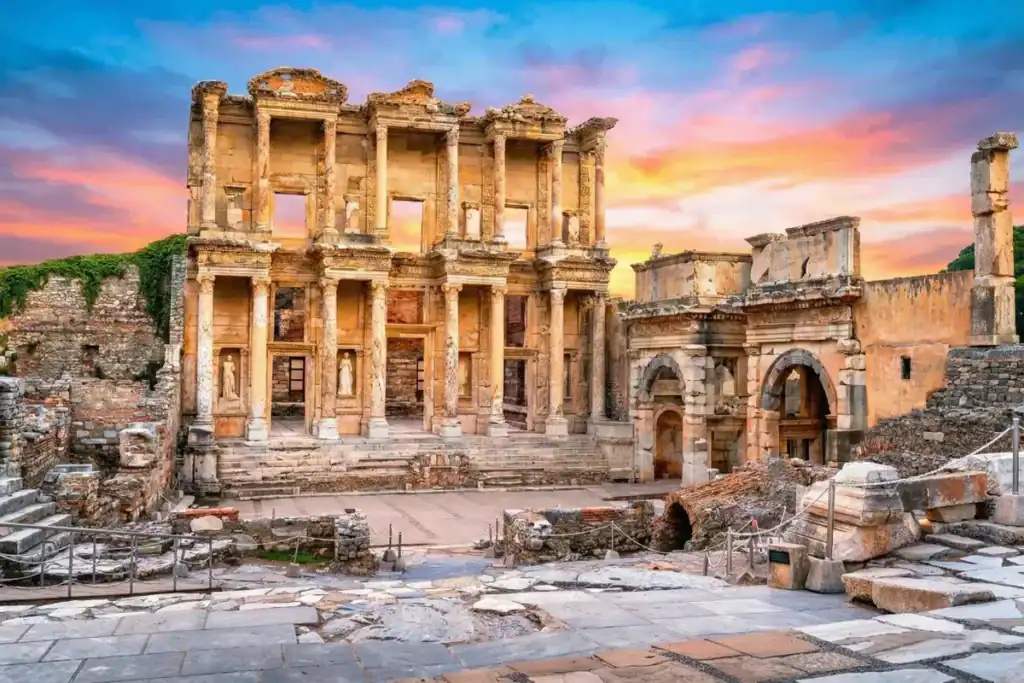
The western coast of Turkey holds two of the most impressive ancient sites in the Mediterranean. Ephesus is the best-preserved Greco-Roman city in the world — walking down its marble streets, past the Library of Celsus and the Great Theatre, you’re following the same path that Saint Paul and Cleopatra once walked. My tip: arrive at opening time. By 11 AM, cruise ship groups flood the site and the experience changes entirely.
Pamukkale, about three hours south, is where natural hot springs cascade over white calcium terraces like frozen waterfalls. The ancient city of Hierapolis sits on top, and swimming in Cleopatra’s Pool — among actual ancient Roman columns submerged in warm mineral water — is something I recommend to every single traveler. I’ve shared my honest take on whether Pamukkale is worth visiting, and the answer is a firm yes if you do it right.
Local Flavor Alert
In the town of Şirince, about 15 minutes from Ephesus, find a small restaurant and order gözleme — thin handmade flatbread filled with spinach and cheese, cooked on a convex iron griddle by village women. Pair it with a glass of locally produced fruit wine (the peach wine is surprisingly good). This is the Turkey that doesn’t make it into travel brochures, and it’s the Turkey I love most.
How Many Days Do You Actually Need in Turkey?
Here’s my honest breakdown after planning thousands of trips:
- 5–6 days: Istanbul + Cappadocia. A strong introduction. Our 5-Day Istanbul and Cappadocia Tour covers this perfectly.
- 7–8 days: Add Ephesus and Pamukkale. This is the sweet spot for most American travelers with limited vacation time. The 7-Day Best of Turkey itinerary is our most popular for good reason.
- 10–14 days: The full picture — add Gallipoli, Troy, Pergamon, Antalya, or Konya. The 10-Day Best of Turkey is what I recommend when someone tells me “I want to see everything.”
Pro Tip
If you’re flying from the US, don’t try to cram Turkey into less than 7 days. By the time you adjust to the time zone (7–10 hours ahead, depending on your city), you’ll lose your first day. Build in a recovery day in Istanbul at the start — your body and your trip photos will thank you.
Practical Travel Tips for Americans Visiting Turkey

Visa: US citizens need an e-Visa, which costs $50 and takes about five minutes to get online. Do it before you fly — I covered the full process in my post on US visa requirements for Turkey.
Flights: Turkish Airlines flies direct from several US cities including New York (JFK), Washington (IAD), Chicago (ORD), Los Angeles (LAX), and Houston (IAH). Flight time is 10–12 hours. Our guide to direct flights from the USA to Turkey has the current routes.
Money: Credit cards are accepted almost everywhere in tourist areas, but carry some Turkish Lira for smaller shops, village markets, and tipping. ATMs are reliable and everywhere.
Safety: Turkey is consistently safe for American tourists. I’ve never had a client report a safety concern in 18 years. Common sense applies — just like any major destination.
Price Alert (2026)
Turkey remains one of the best-value destinations for Americans. A quality guided tour with hotels, domestic flights, entrance fees, and a professional guide typically runs $150–$250 per person per day — significantly less than comparable European destinations. The Turkish Lira’s exchange rate continues to favor the US dollar, making dining, shopping, and experiences remarkably affordable.
Should You Book a Guided Tour or Travel Independently?
I’ll be straight with you — you can absolutely travel Turkey independently. Public transport exists, Google Maps works, and many Turks speak enough English to help you. But after watching independent travelers struggle with internal logistics (missed buses, language barriers at small-town stations, hours wasted figuring out Cappadocia’s spread-out sites), I genuinely believe a guided tour gives you more Turkey for your money and your time.
The difference is especially stark at places like Ephesus and Gallipoli, where having a knowledgeable guide transforms a pile of old stones into a living, breathing story. I wrote about the private vs. group tour decision in Istanbul, and the same logic applies across the country — the right guide doesn’t just show you Turkey, they make you feel it.
🗺 Suggested Route
Classic 10-Day Turkey Route: Arrive Istanbul (2 nights) → Fly to Cappadocia (2 nights, ~1.5 hr flight) → Fly or drive to Pamukkale (1 night) → Drive to Ephesus/Kuşadası (1 night, ~3 hrs) → Drive to Pergamon & Troy (1 night, ~4 hrs) → Drive to Gallipoli & back to Istanbul (1 night, ~4 hrs) → Final night in Istanbul for departure. Total driving across the trip: approximately 15 hours (spread over days with sightseeing stops). With domestic flights for the longer legs, this route is comfortable and covers every major highlight.
About Bilal’s Insider
This article was written by our Turkey expert, Bilal. A seasoned travel expert with 18 years of experience exploring every corner of Turkey. A local secrets keeper who shares deep knowledge like a trustworthy fatherly travel companion. Born and raised in Turkey, he knows the hidden corners that no guidebook mentions.
✈ Recommended Tour
If this guide has you ready to go, our 10-Day Best of Turkey: Istanbul, Pamukkale, Ephesus, Cappadocia covers every destination mentioned here with expert guides, carefully selected hotels, and domestic flights included. It’s the itinerary I’d build for my own family.
Frequently Asked Questions
Is Turkey safe for American tourists in 2026?
Yes. Turkey is one of the safest countries in the region for American travelers. Tourist areas are well-policed, and the Turkish people are famously hospitable to visitors. Standard travel precautions apply, just as they would in any European city.
What is the best month to visit Turkey?
September and October are the ideal months. The summer crowds have thinned, temperatures are warm but comfortable (mid-70s°F), and the light is golden — perfect for photography. April and May are equally excellent, especially for wildflower season in Cappadocia.
How much does a 10-day Turkey trip cost from the USA?
Budget approximately $2,500–$4,000 per person for a well-planned 10-day guided tour, excluding international airfare. This includes hotels, domestic flights, entrance fees, guides, and most meals. International round-trip flights from the US typically run $600–$1,200 depending on the season and departure city.
Do I need a visa to visit Turkey as a US citizen?
Yes, but it’s simple. US citizens need an e-Visa, which costs $50 and can be obtained online in about five minutes at evisa.gov.tr. Apply before your trip — you’ll need to show it at immigration upon arrival.
Can I use US dollars in Turkey?
Many hotels, tour agencies, and shops in tourist areas accept US dollars, but you’ll get better value using Turkish Lira. ATMs are widely available throughout the country, and credit cards are accepted at most restaurants and stores in cities and tourist destinations.
Should I book a guided tour or travel independently in Turkey?
For first-time visitors, a guided tour is strongly recommended. Turkey’s major sites are spread across the country, internal logistics can be complex, and having a local guide dramatically enriches the experience at historical sites like Ephesus and Gallipoli. Independent travel works better for repeat visitors who already know the basics.