

Ask ten travel planners to name the top destinations in the Middle East and you will hear the same six anchors: Cairo and Luxor in Egypt, Petra and Wadi Rum in Jordan, and Istanbul and Cappadocia in Türkiye. The real question is not which places to see — it is how to sequence them so the heat, the flights, and the border crossings work in your favor instead of against you. After decades spent among the temple corridors of the Nile Valley, I can tell you the order matters more than most travelers realize: start in Egypt, cross to Jordan by a short regional flight, and finish in Türkiye, where the climate is gentler and the pace slows down.
This guide walks through each anchor destination the way I would brief a friend flying in from the United States — what deserves a full day, what can be folded into a half-day, and where travelers consistently burn money on routing mistakes.
📋 Quick Facts
| Best Time to Visit | October–April for Egypt and Jordan; April–June or September–October for Türkiye |
| Time Needed | 8 days for one country, 13–15 for two, 17–20 for all three |
| Difficulty | Moderate — early starts, uneven ground at archaeological sites, desert heat |
| Must-Bring | Closed walking shoes, sun cover, small US dollar bills for visas and tips |
Which Middle East Destinations Should Come First on Your Itinerary?

Egypt first, always — and not for sentimental reasons. Cairo receives the most direct long-haul flights from the US East Coast, Egyptian sites demand the earliest mornings (you want to be at the Pyramids of Giza by 8 AM, before the tour buses arrive from the Red Sea resorts), and your energy is highest at the start of a long trip. Jordan sits naturally in the middle: Amman is a 75-minute flight from Cairo, and Petra’s canyon walk is easier on legs that have already adjusted to the time zone. Türkiye closes the journey because Istanbul is the region’s best final stop — better food variety, cooler evenings, and the widest selection of nonstop flights home to American cities.
Travelers who reverse this order — Istanbul first, Cairo last — often regret it. They arrive in Egypt already tired, face the trip’s most physically demanding sites at their lowest energy, and frequently end up backtracking through Istanbul anyway for the flight home. I covered the flight-saving logic in detail in my colleague’s breakdown of the 17-day Turkey-Jordan-Egypt route, and the principle holds at any trip length: fly south-to-north, never zigzag.
With the sequence settled, let me show you how to spend your days inside each country — beginning at home, along the Nile.
Egypt: How to Divide Your Days Between Cairo, Luxor and Aswan
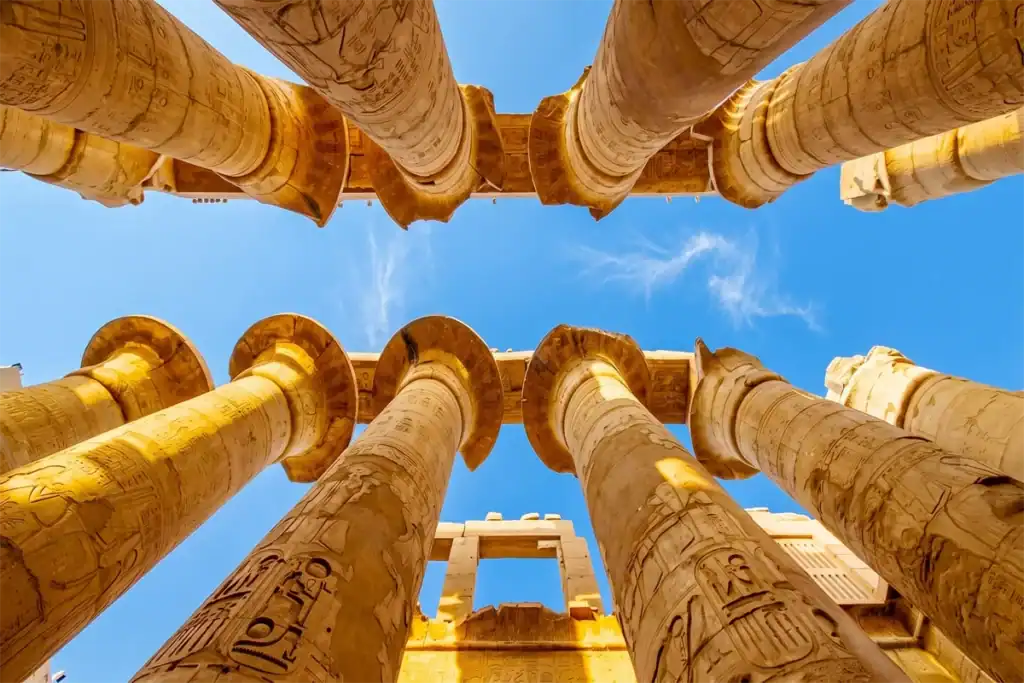
Egypt needs a minimum of five days, and seven to eight is the comfortable number. Here is the division that respects both the monuments and your stamina:
- Cairo — 2 full days. One day for Giza and Saqqara, where the Step Pyramid predates Giza by a century and the crowds are a fraction of the size. The second day belongs to the Egyptian Museum collections and an unhurried evening in Khan El Khalili — go after 5 PM, when the lanterns come on and the daytime coach groups have left.
- Luxor — 2 days minimum. The East Bank (Karnak Temple and Luxor Temple) and the West Bank (Valley of the Kings, the Temple of Hatshepsut) each deserve their own morning. Karnak at opening time, before the light flattens, is a different building than Karnak at noon.
- Nile cruise — 3 to 4 nights, optional but recommended. The river between Luxor and Aswan carries you past Edfu and Kom Ombo, temples that are awkward to reach any other way. If you are weighing the cruise against extra hotel nights, the guide on how many days to spend in Egypt lays out both versions honestly.
One routing note Americans often miss: Luxor and Aswan are connected to Cairo by short domestic flights, not convenient trains. A well-built package books these legs together, which is why bundled tours frequently undercut the price of a self-assembled trip.
Ibrahim’s Secret
At Karnak, almost everyone enters with the crowd and walks straight down the central axis. Instead, after the Great Hypostyle Hall, turn right toward the Sacred Lake and circle back along the southern courts. You will have entire colonnades nearly to yourself while the groups cluster around the obelisks — and the late-morning light raking across the lake is the finest photograph in Luxor that nobody takes.
From the Nile, the road leads east across the Red Sea — to a city the Nabataeans carved out of rose-colored stone.
Jordan: Petra, Wadi Rum and the Dead Sea in Four Days

Jordan is the most compact of the three countries, and that compactness is its gift. From Amman, every major site sits within a three-hour drive, which means four days covers the essentials without a single internal flight.
- Day 1 — Amman and Jerash. The Roman colonnades of Jerash, an hour north of the capital, are among the best-preserved outside Italy, and the site rarely feels busy outside spring weekends.
- Day 2 — Petra, full day. Enter at 7 AM. The walk through the Siq to the Treasury takes about 40 minutes at a relaxed pace, and arriving early means you see the facade in shadow-cut morning light with perhaps two dozen other people instead of two thousand. Budget six hours minimum; the Monastery climb adds two more.
- Day 3 — Wadi Rum. A 4×4 desert afternoon and, ideally, a night in a desert camp. The silence after sunset is the thing travelers mention years later.
- Day 4 — the Dead Sea on the drive back toward Amman, with a stop at Mount Nebo if biblical history interests you. Float in the late afternoon, when the sun softens and the salt haze turns gold.
A trade-off worth naming: some travelers try to compress Jordan into two days — Petra and nothing else. It can be done, but you spend ten of those forty-eight hours in a vehicle, and Wadi Rum is the piece you will wish you had kept. If your total trip is short, drop a Cairo museum afternoon before you drop the desert night.
Local Flavor Alert
In Amman, order mansaf — lamb cooked in fermented dried yogurt over rice — at a traditional restaurant downtown rather than a hotel dining room. The jameed sauce should be poured tableside, slightly sharp and steaming. And in Egypt before you leave, do not skip koshari from a busy Cairo shop: lentils, rice, pasta, crispy onions, and spiced tomato sauce layered in a bowl for the price of a coffee back home. It is the dish Cairenes actually eat, and the busiest shops turn it over so fast it is among the safest street meals in the city.
From Jordan’s deserts, a three-hour flight north lands you in the only city on earth that straddles two continents.
Türkiye: Why Istanbul and Cappadocia Close the Trip Perfectly

Türkiye asks for five to six days at the end of your route — three in Istanbul, two in Cappadocia, connected by a 75-minute domestic flight.
In Istanbul, the Sultanahmet cluster — Hagia Sophia, the <a href="https://www.onenationtravel.com/attractions/blue
✈ Recommended Tour
20-Day Egypt, Jordan and Turkey Tour: Cairo to Istanbul Adventure
Duration: 20 days
For travelers who want flights, transfers, hotel logistics, and guided sightseeing handled in one plan, this is the easiest way to turn the article into a bookable trip.
Frequently Asked Questions About Explore Top Destinations in the Middle East
What is the quickest answer for travelers planning Explore Top Destinations in the Middle East?
Use the route, timing, and trade-offs in this guide as the starting point, then adjust the pace around flight times, hotel location, and how much guided support you want. Short trips work best when the logistics are planned before the sightseeing list gets too ambitious.
When should I book a guided tour instead of planning it myself?
A guided tour is usually smarter when the itinerary depends on domestic flights, early pickups, local transfers, or timed museum visits. It saves the most value when one missed connection would affect the rest of the trip.
What costs should I check before booking?
Check whether domestic flights, airport transfers, entrance fees, hotel category, meals, and optional experiences are included. Optional add-ons and badly timed flights often change the real cost more than the headline price suggests.
How do I avoid choosing the wrong route for this destination?
Match the route to your travel style first: history, scenery, family comfort, beach time, or photography. A good itinerary should explain what you gain and what you give up instead of listing every possible stop.
What is the easiest way to book this trip?
The easiest option is to use 20-Day Egypt, Jordan and Turkey Tour: Cairo to Istanbul Adventure when you want hotels, transfers, domestic timing, and guided sightseeing handled in one plan.