
If you’re planning a pamukkale day trip in 2026, the short answer is this: yes, Pamukkale is absolutely worth your time, but only if you visit at the right hours, enter from the right gate, and combine the white terraces with the ancient ruins above them. I’ve guided travelers here for years, and the ones who enjoy it most are the ones who treat it not as a quick photo stop, but as a half-day to full-day visit with a little strategy.
In this pamukkale guide 2026, I’ll show you how I personally recommend you visit Pamukkale Turkey, what to expect from the famous Cotton Castle, how much time you need, what mistakes to avoid, and when to go if you want beauty without shoulder-to-shoulder crowds. If you’re deciding whether to do it independently or join a pamukkale cotton castle tour, I’ll help with that too.
📋 Quick Facts
| Best Time to Visit | April-May and September-October, especially early morning or late afternoon |
| Time Needed | 4 to 6 hours for a proper day trip |
| Difficulty | Easy to moderate; barefoot walking on wet travertines can be slippery |
| Must-Bring | Water, sunglasses, sun protection, quick-dry towel, and sandals for before/after barefoot sections |
📊 Best Times to Visit
| Time | Crowd Level | Tip |
|---|---|---|
| Early Morning (7-9 AM) | 🟢 Low | Best for soft light, cooler temperatures, and peaceful photos on the white terraces. |
| Midday (11 AM-2 PM) | 🔴 High | Expect stronger sun, tour bus arrivals, and hotter surfaces; carry more water than you think you need. |
| Late Afternoon (4-6 PM) | 🟡 Medium | Very good for warmer light and a slower pace after many day groups begin leaving. |
What is Pamukkale and why do people call it the Cotton Castle?

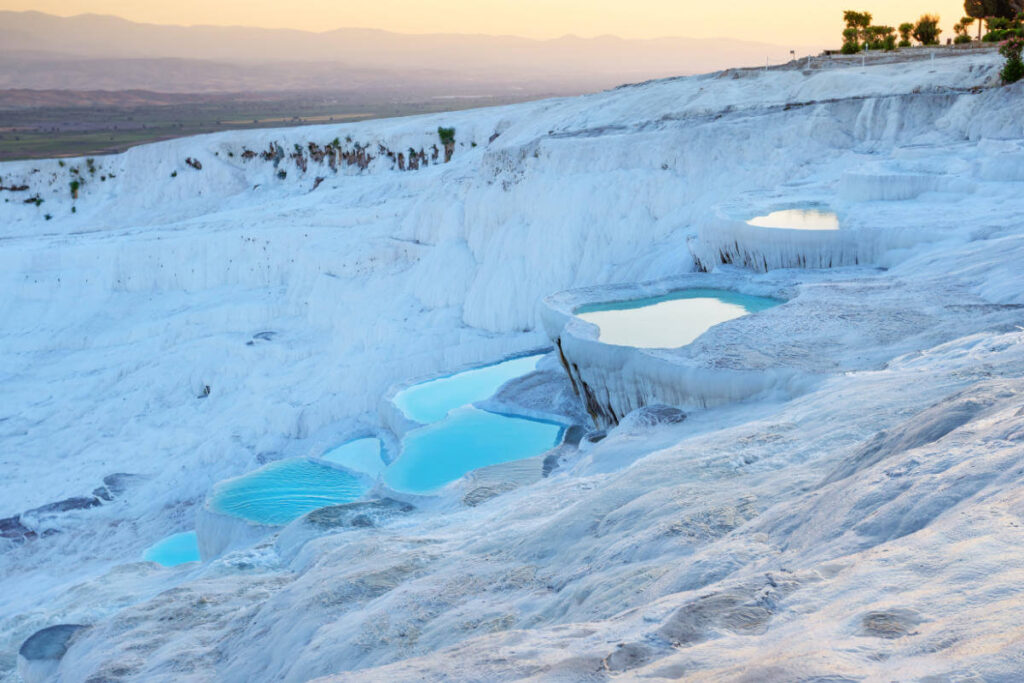
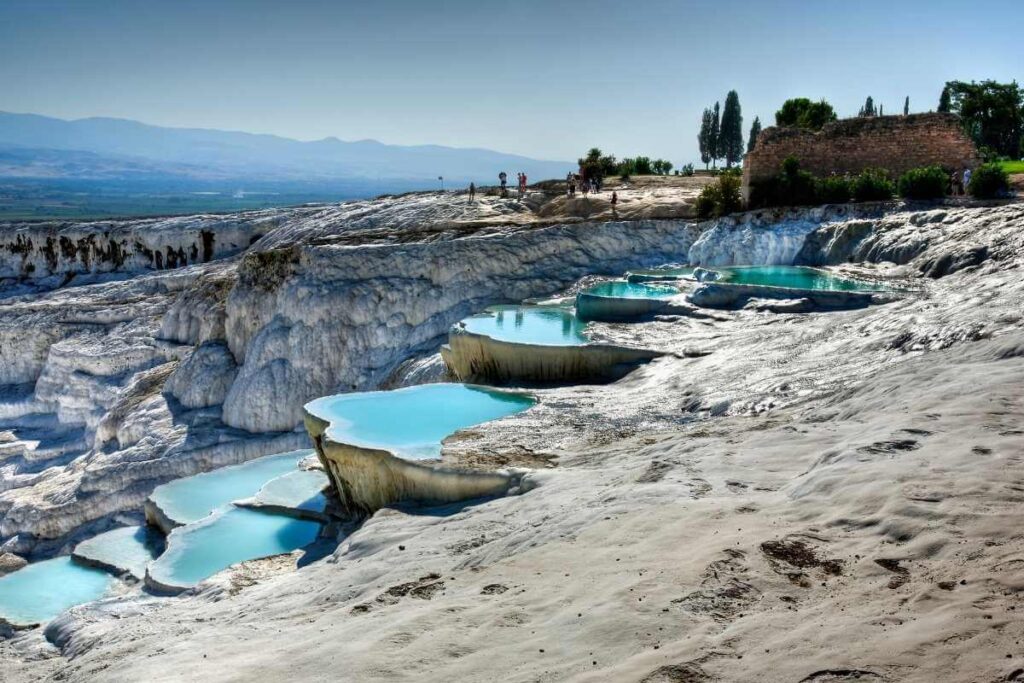
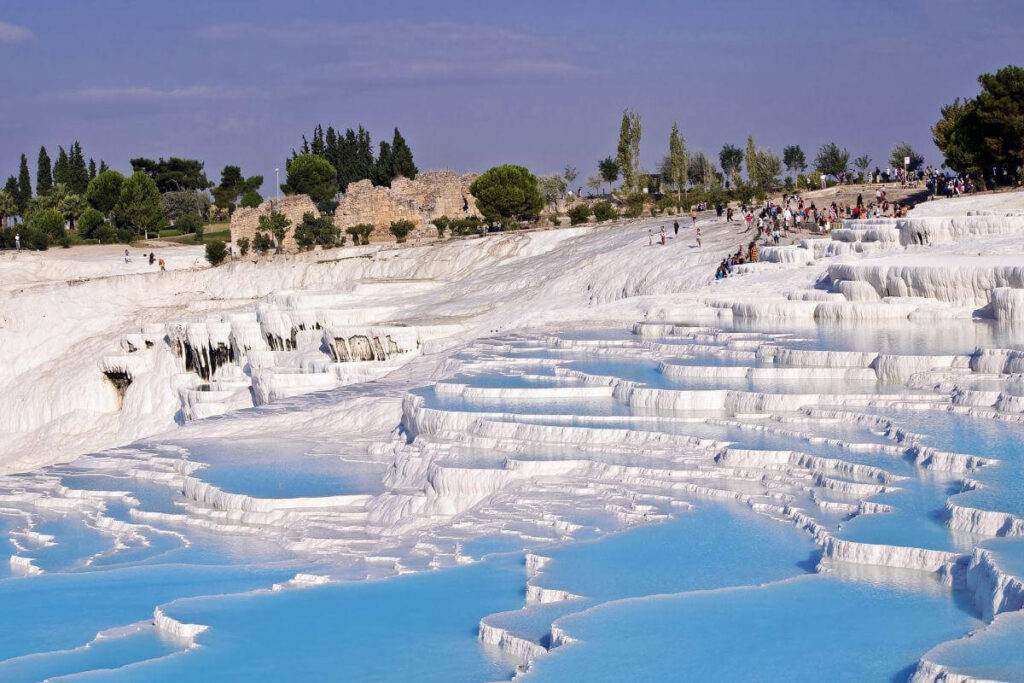
Pamukkale is a natural terrace formation in southwestern Turkey, famous for its bright white mineral pools and slopes. The name means “cotton castle,” and when you first see the cascading white surface, you understand immediately why people use that phrase.
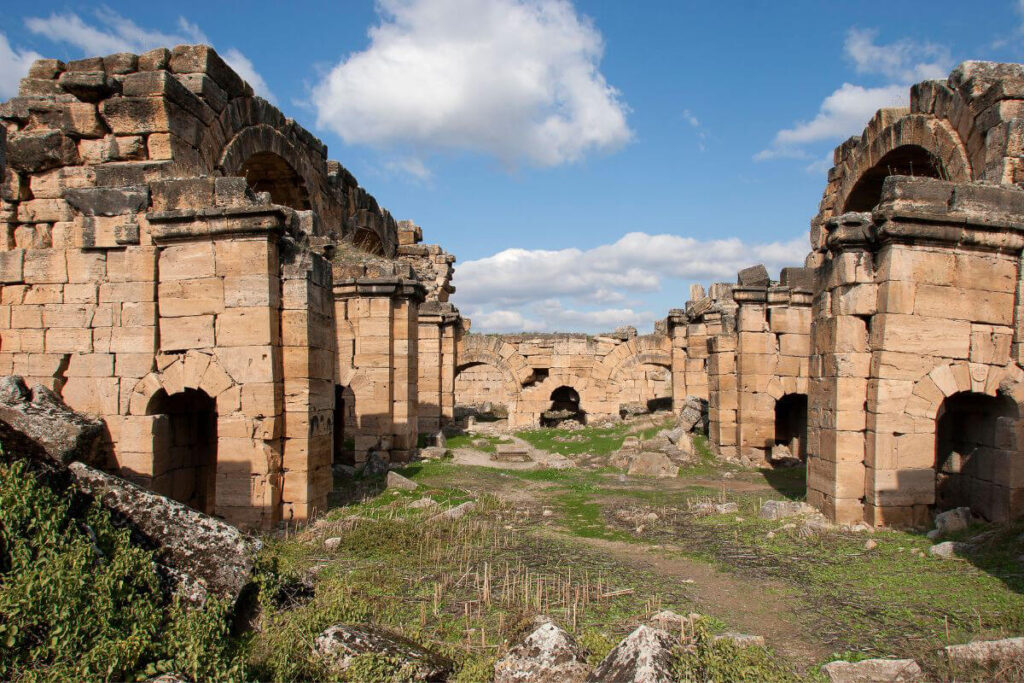
But here is the part many first-time visitors don’t realize: Pamukkale is not only the white pools. Sitting directly above it is the ancient spa city of Hierapolis-Pamukkale, where Romans once came to bathe, heal, gossip, and do what all civilized people do on holiday—walk around slowly and pretend they have nowhere to be. If you only snap a few terrace photos and leave, you miss half the soul of the place.
I always tell my American guests that Pamukkale works best when you think of it as two experiences in one: a natural wonder and an archaeological site. That combination is exactly what makes it special. And once you understand that, planning the day becomes much easier.
How much time do you need for a Pamukkale day trip?
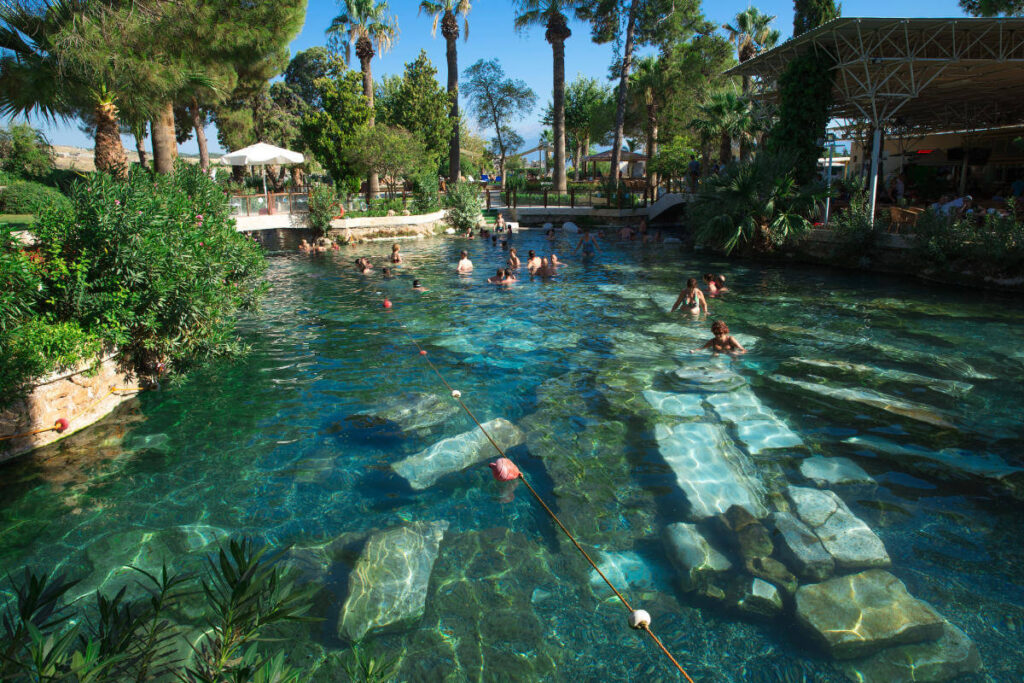
For most travelers, I recommend 4 to 6 hours. That gives you enough time to walk the terraces, enjoy the upper ancient city, take a break, and perhaps swim in the historic thermal waters at Cleopatra Antique Pools in Pamukkale if that interests you.
If you move quickly, you can see the main highlights in 3 hours. But that kind of visit often feels rushed. On the other hand, if you love ruins and slow wandering, you can easily spend most of a day exploring the theater, necropolis, old streets, and baths inside Hierapolis.
My own ideal pace looks like this:
- 1 hour for the white terraces and photos
- 1.5 to 2 hours for Hierapolis ruins
- 45 minutes to 1 hour for the pool, tea, or lunch break
- Extra buffer for heat, rest, and walking time
Bilal’s Secret
If you want the white terraces to look their cleanest in photos, don’t race to the most crowded central section first. I usually guide guests to start with the upper approach, enjoy the quieter edges, and then drift toward the classic postcard views once the light improves. Most people do the opposite, and that is why their first 30 minutes feel chaotic.
If you’re still deciding whether the site deserves a full stop on your itinerary, I covered the pros and cons in my article Is Pamukkale Worth Visiting? The Honest Pros and Cons. It helps many travelers settle the question before they book anything.
How do you visit Pamukkale Turkey the right way?
To visit Pamukkale Turkey properly, I recommend a simple plan:
- Arrive early or later in the afternoon. Midday is the hardest time because of sun, glare, and tour bus traffic.
- Wear easy-to-remove shoes. On the travertine sections, you’ll need to go barefoot.
- Start with the terraces, then move up to Hierapolis. This gives your visit a nice rhythm.
- Carry water and sun protection. The white surface reflects light strongly, and people underestimate the heat.
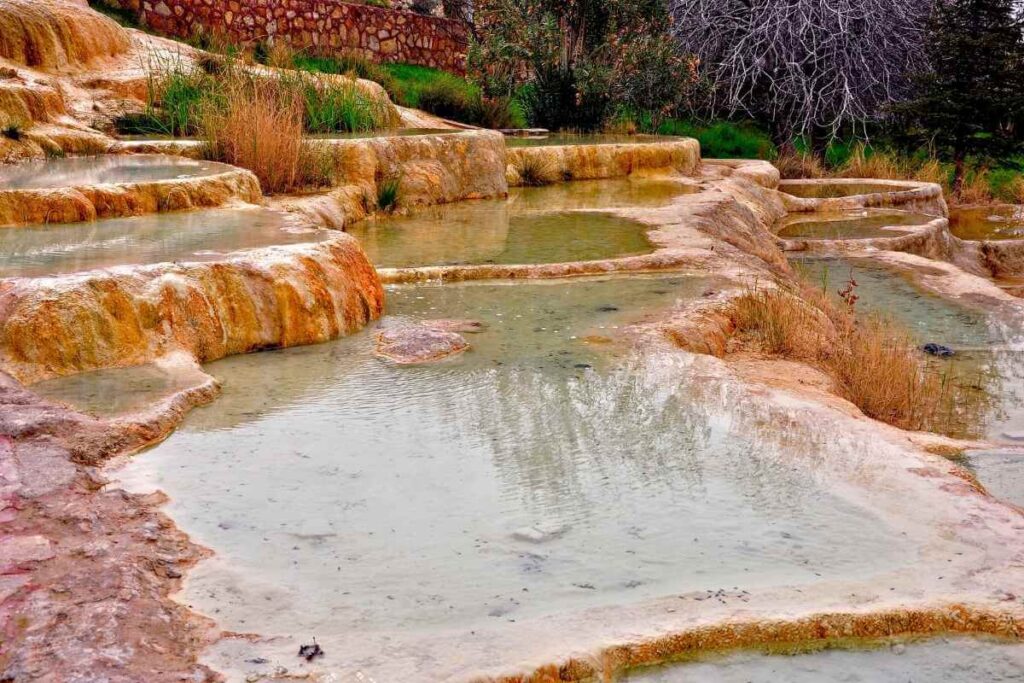
- Don’t expect every terrace to be full of water. Water flow is managed to protect the site, so conditions vary.
This last point matters. Some travelers come expecting every inch to look like a heavily edited Instagram image. Real Pamukkale is still beautiful, but it changes depending on season, maintenance, and water management. I prefer honest expectations because they usually lead to happier travelers.
Pro Tip
Bring a small waterproof pouch for your phone, room key, and cash. Once you take off your shoes and step into shallow water, you’ll want your hands free and your valuables protected. It’s a small thing, but it saves a lot of awkward balancing.
If you’re coming from Istanbul and trying to combine a short Turkey route efficiently, a tour such as the 2-Day Pamukkale and Ephesus Tour from Istanbul (Domestic Flights Included) can be much easier than piecing together separate buses and transfers.
What are the best things to see on a Pamukkale day trip?
On a proper pamukkale day trip, these are the highlights I tell people not to skip:
1. The white terraces
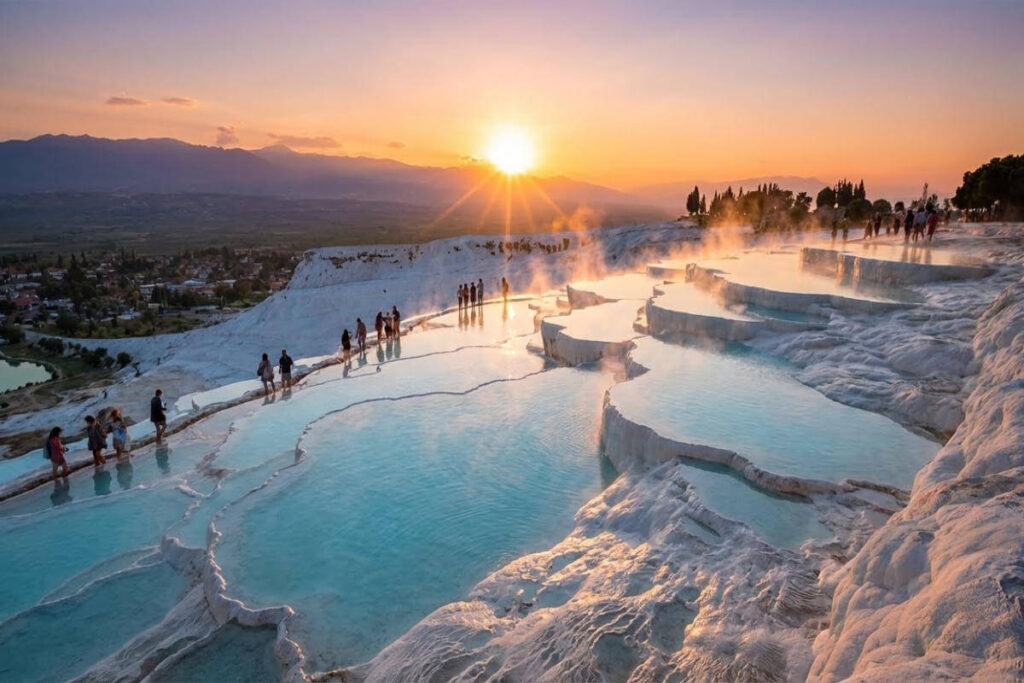
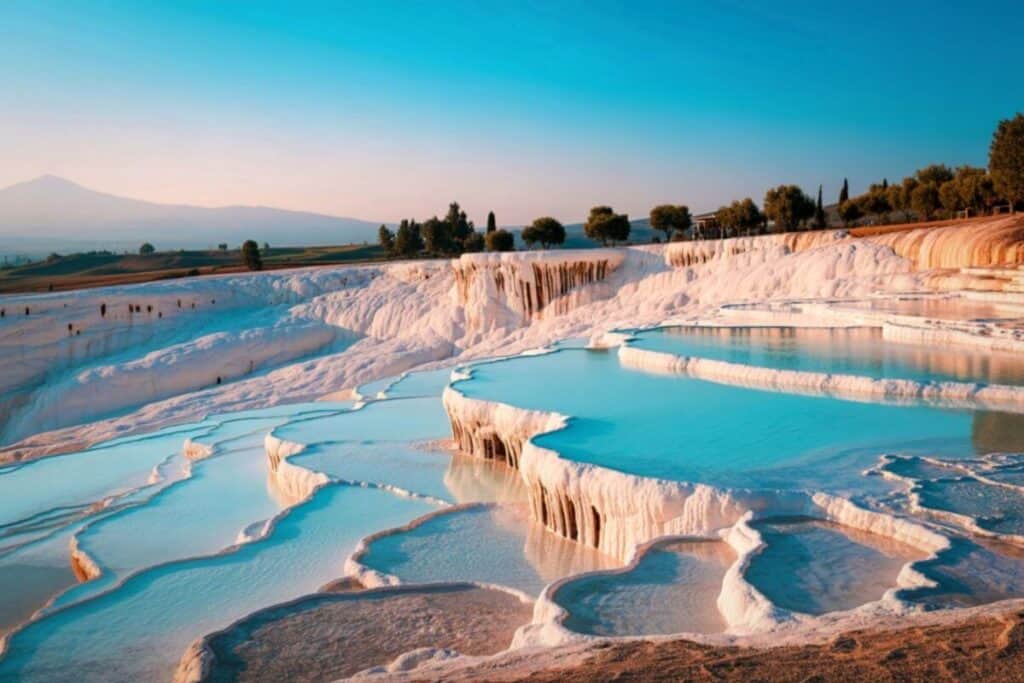
The famous limestone shelves are what bring everyone here. You’ll walk barefoot over parts of the white surface and shallow pools, with views across the valley below. The reflective light is beautiful in the morning and softer again later in the day.
2. Pamukkale Travertines
Yes, this is the iconic section, but I separate it because many travelers don’t realize the terraces are geologically fragile and protected. Walk where permitted, move carefully, and don’t rush. The slower you go, the more you notice the textures and water patterns.
3. Hierapolis Theatre
This is one of my favorite spots in the whole complex. While many visitors linger only on the white slopes, the theater rewards those who climb a little farther. The scale is impressive, and from up there you get a better feel for how important this ancient spa city once was.
4. Necropolis of Hierapolis
If you enjoy archaeology, don’t miss this area. It is one of the largest ancient cemeteries in Turkey, and walking through it gives a quieter, more reflective side to the visit. I often bring history-loving guests here after the bright terraces because the contrast is powerful.
5. Roman Baths of Hierapolis
These structures remind you that Pamukkale was not only scenic but therapeutic. For centuries, people came for the thermal waters. Today, seeing the bath complex helps connect the natural landscape to its ancient wellness culture.
6. The Cleopatra Pool at Pamukkale
This is optional, not essential. Some people love the chance to swim among submerged ancient columns. Others prefer to spend that time on the ruins and terraces. I usually tell guests: if you already enjoy thermal pools, go for it; if not, don’t feel pressured.
Local Flavor Alert
After a warm walk around Pamukkale, I like to stop for a simple Denizli-style meal: grilled köfte, fresh village bread, and a cold glass of ayran. If I’m with guests who want something sweet, I tell them to look for local grape molasses products and a small plate of seasonal fruit. Nothing fancy—just the kind of honest food that tastes right after mineral water, sun, and ancient stones.
If ancient sites are your weakness, pairing Pamukkale with Ephesus makes excellent sense. I explain the Ephesus side in more depth in my guide Ephesus Travel Guide: 7 Ruins You Must See.
What is the best route for a day at Pamukkale?

The best route depends a little on where you enter, but this is the rhythm I personally prefer for first-time visitors. It avoids wasting energy early and keeps the best contrasts in the right order.
🗺 Suggested Route
Start at the main Pamukkale entrance and head first toward the Travertines of Pamukkale. Spend 45-60 minutes walking the terraces and taking photos. Then continue uphill into Hierapolis-Pamukkale, allowing about 20 minutes of walking between major points. Visit the Roman Baths of Hierapolis, then the Agora of Hierapolis, and continue to the Hierapolis Theatre. If you still have energy, finish with the Necropolis of Hierapolis. Plan 4-6 hours total, including rests and photo stops.
What I like about this route is that it begins with the visual drama people came for, then gradually deepens into history. It feels complete. By the end, guests usually say, “I didn’t expect the ruins to be this interesting.” That happens almost every time.
Can you do Pamukkale as a day trip from Istanbul, Izmir, or nearby towns?
Yes, but the experience changes a lot depending on your starting point.
From Denizli
This is the easiest base. Pamukkale is very close, so a local day trip is simple and efficient.
From Izmir or Selçuk
This is very doable if you start early. Many travelers combine Pamukkale with western Turkey highlights, especially Selçuk and Ephesus.
From Istanbul
Possible, yes—but only practical if you fly or join an organized tour. Doing it all overland in one day is tiring and not how I advise people to spend their precious vacation energy.
For travelers wanting an easy framework, I often suggest the 4-Day Istanbul & Pamukkale Tour with Flights or broader multi-stop routes through western Turkey. If you want to browse options, the main Turkey Tours collection is the best starting point.
Private Airport Transfer
For Pamukkale, the nearest practical airport is Denizli Çardak Airport (DNZ), about 1 hour to 1 hour 15 minutes from the Pamukkale area depending on traffic and your hotel location. I always tell my guests that a private transfer is calmer than negotiating taxis after a flight, especially if you’re arriving with luggage, family, or a tight sightseeing schedule. You sit down, your driver knows where to go, and your holiday begins without bargaining or confusion.
If you’re traveling around Turkey and still planning the bigger picture, my Complete Turkey Travel Guide 2026 helps connect places like Istanbul, Cappadocia, Ephesus, and Pamukkale into one sensible route.
What should you wear and bring for Pamukkale?
This may sound like a small question, but it makes a big difference. Pamukkale is one of those places where the wrong shoes or poor sun protection can turn a pleasant day into a tiring one.
Here’s what I recommend:
- Slip-on shoes or sandals: easy to remove before barefoot areas
- Sunglasses: the white surfaces reflect strong light
- Hat and sunscreen: very important in warmer months
- Water bottle: you’ll need it more than you think
- Swimwear and towel: if you plan to use thermal pools
- A light change of clothes: helpful if your feet and lower legs get wet
I’ve seen many people come dressed as if they are visiting a city museum. Pamukkale is not difficult, but it asks for practical clothing. My fatherly advice: prepare for sun, water, and walking, all at once.
Price Alert (2026)
Entry fees in Turkey can change quickly, especially at major archaeological sites, so always check official current rates before your visit. For 2026, budget not only for the main Pamukkale-Hierapolis entrance but also extra if you plan to swim at Cleopatra’s Pool, plus transport, drinks, and perhaps a locker or snack. My rule of thumb: keep a little cash buffer beyond the posted entrance price so the day stays relaxed.
When is the best time to visit Pamukkale in 2026?
For me, the best months are April, May, late September, and October. The weather is usually friendlier, the light is kinder, and walking through the site feels much more comfortable than in peak summer.
Summer is possible, of course, but I speak honestly with my guests: the midday heat can be exhausting. The white stone reflects sunlight, shade is limited, and by noon some travelers are no longer enjoying themselves—they are simply enduring it. If you visit in summer, start early and pace yourself carefully.
Winter has its own quiet beauty, though weather can be less predictable. On cold days, the contrast between steam, water, and white mineral slopes can be very atmospheric. But for a classic first visit, spring and autumn are still my recommendation.
I made a similar argument about timing in my article Why You Shouldn’t Visit Turkey in Summer (October Secret Locals Keep). The same logic applies strongly to Pamukkale.
Is a Pamukkale cotton castle tour better than visiting independently?
It depends on your travel style. I’m not dogmatic about this. Some travelers enjoy planning every bus, ticket, and step themselves. Others want someone else to handle the moving parts so they can focus on the place.
A pamukkale cotton castle tour is usually better if:
- You are short on time
- You want to combine Pamukkale with Ephesus, Pergamon, or other stops
- You prefer direct logistics and less guesswork
- You value historical explanation on-site
Independent travel is usually better if:
- You are already staying nearby
- You enjoy flexible pacing
- You don’t mind organizing your own transport and timing
Personally, I think first-time visitors often get more out of a structured route, especially if Pamukkale is one stop among several. That is why multi-stop packages in western Turkey can work so well. You spend less time solving transport puzzles and more time actually seeing Turkey.
What mistakes should you avoid on your Pamukkale day trip?
After many years of guiding, these are the mistakes I see most often:
- Arriving at the hottest hour. The site is far gentler in the morning or late afternoon.
- Expecting only pools and no ruins. Hierapolis is half the reason to come.
- Wearing awkward shoes. You’ll regret laces and heavy sneakers.
- Underestimating the walking. It is not a hard site, but it is bigger than people think.
- Skipping water and sun protection. This is the classic avoidable error.
- Trying to rush through in 90 minutes. That turns beauty into checklist tourism.
I say this gently, like I would to my own family: Pamukkale rewards patience. Sit for five minutes. Look at how the water moves. Climb one extra section in Hierapolis. Let the place breathe a little. That is when people start to feel why it has attracted visitors for centuries.
About Bilal’s Insider
This article was written by our Turkey expert, Bilal. A seasoned travel expert with 18 years of experience exploring every corner of Turkey. A local secrets keeper who shares deep knowledge like a trustworthy fatherly travel companion. Born and raised in Turkey, he knows the hidden corners that no guidebook mentions.
✈ Recommended Tour
The 4-Day Gallipoli, Troy, Pergamum, Ephesus and Pamukkale Tour is a very smart choice if you want Pamukkale as part of a deeper western Turkey route. I like this itinerary because it connects thermal landscapes, classical ruins, and moving historical sites without forcing you to arrange every transfer yourself.
Frequently Asked Questions
Is Pamukkale worth visiting in 2026?
Yes, absolutely—especially if you pair the terraces with Hierapolis and visit at the right time of day. Travelers who come early, pace themselves well, and see both the natural and historical sides usually leave very satisfied.
How long should I spend at Pamukkale?
I recommend 4 to 6 hours for a balanced visit. That gives you time for the terraces, ruins, rest breaks, and optional swimming without making the day feel rushed.
Can I visit Pamukkale as a day trip from Istanbul?
Yes, but it is best done by flight or as part of an organized tour. Trying to force a same-day overland trip from Istanbul is tiring and usually not the best use of your holiday time.
What should I wear to Pamukkale?
Wear light, practical clothes, easy-to-remove shoes, and bring sun protection. Since some areas require barefoot walking and can be wet, simple sandals and a small towel are often very helpful.
Is Cleopatra’s Pool included in the main ticket?
Usually, swimming there is charged separately from the main site entrance. Prices can change, so I always advise checking current official details before your visit.
Is it better to book a Pamukkale cotton castle tour?
If you are combining Pamukkale with other destinations or want easy logistics, yes, a tour can be the better choice. If you are already nearby and prefer full flexibility, independent travel works well too.
If you’d like help fitting Pamukkale into a smarter Turkey itinerary, I’d be glad to point you in the right direction through Plan My Trip. A little local planning at the beginning can save you a lot of wasted time later.